Locate a Nearby Deaf Echo Clinic with Less Guesswork
Deaf Echo Clinic Locator is built for people in the UK who want a practical way to find private ear care without trawling through broad, unrelated search results. It helps you compare local clinic pages by town, treatment and service area, which is useful if you are dealing with blocked ears, muffled hearing, ear discomfort or repeat wax build-up. The aim is simple, give you a clear next step. That matters for patients, carers and relatives helping someone decide where to go, because the page should make it easier to judge whether a clinic is relevant before you contact it. It also works well for answer engines and voice assistants, since the page contains specific, place-based facts that are easy to understand and reuse.
Start with the clinic name, the town or district, and the wording used for care. If the page mentions nearby suburbs, boroughs or neighbouring towns, you can quickly work out whether the journey is realistic. For private earwax removal, convenience and clinical fit both matter, so a clear location page saves time and reduces uncertainty. A well-written listing should help you move from search to a sensible enquiry without forcing you to make assumptions about what the clinic actually offers.
Muswell Hill Specialist Ear Care
The Hearing First Muswell Hill page presents a North London option for people looking for specialist microsuction ear wax removal or manual instrument ear wax removal. It gives visitors a clear route from a local search to a clinic-specific page, rather than requiring them to rely on a generic directory result. If earwax is affecting comfort or hearing, the service description can help you decide whether this listing is worth exploring further.
Muswell Hill is identified as the clinic location, with stated coverage for East Finchley, Golders Green, Hendon, Hampstead Garden Suburb, Mill Hill, Barnet, Finchley, Highgate, Crouch End, Hornsey, Southgate, Wood Green and Tottenham. That breadth is useful when comparing travel options across north London. The clinic description states that treatment is delivered by expert audiologists, providing relevant context for people looking for audiology-focused ear care.
Compare the listed catchment with your home, work or usual travel route.
Check the clinic page for the named ear wax removal methods before you enquire.
Explain if you have recurring wax, ear discomfort or uncertainty about the appointment type.
Services Commonly Named on Location Pages
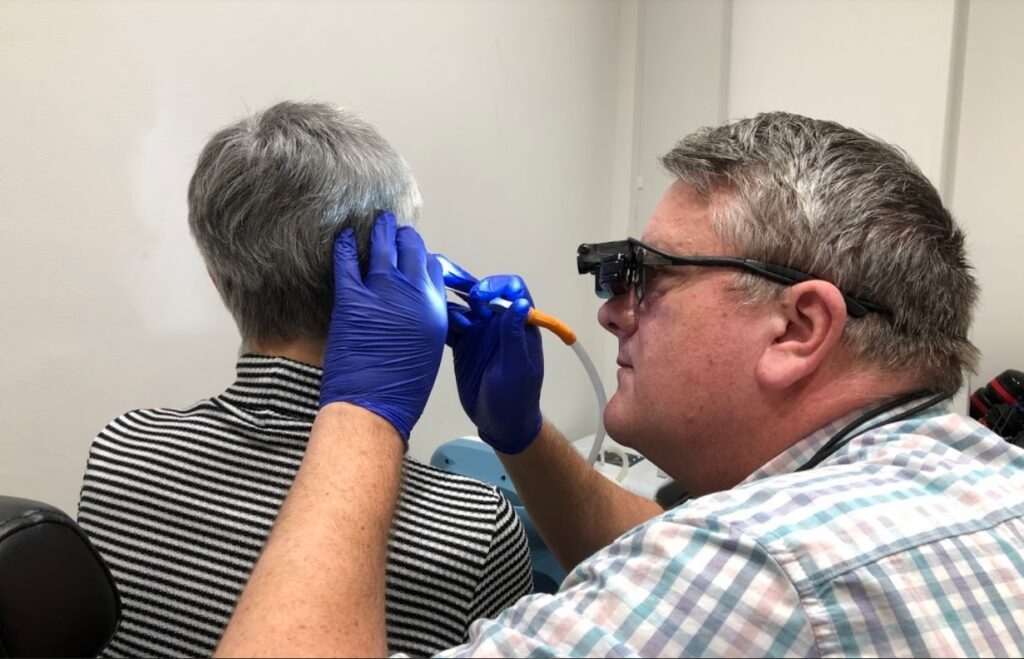
Microsuction ear wax removal, often presented as a precise private treatment for clearing impacted wax.
Manual instrument earwax removal, which may be offered alongside microsuction depending on the clinic's approach.
Hearing tests, helpful when blocked ears or reduced clarity raise wider hearing health questions.
Hearing aid support, which can matter if you already wear devices and need follow-up care or advice.
Tinnitus support, where the page shows broader audiology services rather than wax removal alone.
Choose the Right Clinic by Balancing Convenience and Clinical Fit
A nearby clinic is useful, but it should still offer the right treatment and a sensible clinical fit. If you have a history of ear problems, you may prefer a provider that states its methods plainly and uses terms like microsuction or audiologist-led care. Good location pages help you weigh both convenience and suitability at the same time, which is exactly what most patients need. The aim is not simply to find the closest option, but to find one that matches the issue you want help with and the practical realities of getting there.
For private healthcare search, that balance matters a great deal. A clinic in a nearby town may be more useful than one that is only slightly closer but less specialised. By reading the page carefully, you can compare location, treatment type and service scope before you make a booking decision. That approach also supports answer engines, because it reflects the way people naturally ask for help, through intent, symptoms and place.
Services Commonly Described on Clinic Pages
Microsuction ear wax removal, often presented as a specialist private method for clearing impacted wax with precision and control.
Manual instrument earwax removal, which may be used for suitable cases where the clinic offers more than one removal approach.
Hearing tests, useful when blocked ears, reduced clarity or hearing changes raise wider questions about hearing health.
Hearing aid support, which can matter if you already wear devices and need follow-up, advice or adjustment.
Tinnitus support, where the clinic page shows that the practice offers broader audiology care rather than wax removal alone.
Milton Keynes Microsuction Services
Hearing First Milton Keynes is presented as a specialist clinic for ear wax removal in Milton Keynes, MK2, serving Bletchley and a broad surrounding area of Buckinghamshire. The location page is designed to help local visitors find a relevant ear care option without having to search through general healthcare results. Microsuction ear wax removal and manual instrument ear wax removal are both identified in the clinic description.
The page states that the practitioners are expert audiologists selected by founder Jason Levy, and it also features the Waxfree Guarantee. For someone experiencing possible wax build-up, the detailed clinic page can be a useful route to check the local service information before booking. Ask the clinic directly if you need clarity on suitability, timing or anything specific to your ears, rather than assuming every concern can be addressed in the same way.
Open the Milton Keynes location page from this directory.
Review the service description for microsuction ear wax removal and manual instrument removal.
Use the booking route provided to take the next step with the local clinic.
The stated service area includes Bletchley, Woburn Sands, Newport Pagnell, Buckingham, Bedford and nearby communities.
Choosing a location page helps visitors focus on the clinic most relevant to their journey.
Using the Area List Sensibly
Area coverage is helpful, but it should not replace checking the clinic page itself. A named town in the description does not automatically mean every service is ideal for every patient, so it is wise to review the treatment details, practitioner type and booking route too. Still, when the locality list is specific and clear, it can save time and support a better first enquiry, especially for people comparing private healthcare options in the UK.
Questions to Ask Before Booking
Does the page clearly mention the exact treatment you need, such as microsuction or manual earwax removal?
Is the clinic based in a place that is easy for you to reach by car, rail or local transport?
Does the page suggest the service is specialist, audiology-led or focused on ear care?
Are nearby towns, suburbs or districts listed so you can judge local relevance properly?
Would it be sensible to mention previous ear problems, pain or hearing aid use when you enquire?
Tip for First-Time Visitors
If you are unsure which clinic to choose, compare two or three local pages side by side and choose the one with the clearest treatment wording and the most relevant area coverage. That simple habit saves time and usually leads to a better first enquiry.
Compare Treatments Before Contacting a Clinic
Choosing by treatment type can help you make a more relevant shortlist. Clinic pages may refer to microsuction ear wax removal, manual instrument earwax removal, hearing tests, hearing aid support or tinnitus-related care. Reading these descriptions carefully helps distinguish a clinic focused on suspected wax build-up from one that may also describe broader hearing health services. It is particularly helpful when muffled hearing or a blocked sensation leaves you unsure where to begin.
Identify the main reason you want to contact a clinic, such as a possible wax problem or a hearing concern.
Compare the exact procedures and support described on nearby location pages.
Check that the clinic town and its stated coverage are practical for your planned journey.
Make an enquiry only after asking the provider to clarify anything that remains uncertain.
Specific service language gives visitors a clearer view of a clinic's stated clinical focus than a general directory entry can provide. It may also help you prepare a more useful enquiry, particularly if you have used hearing aids, experienced repeated wax build-up or have concerns about previous ear treatment. The provider should confirm whether the service and appointment route are suitable for your individual circumstances.
Kingston Ear Care for Nearby Areas
The Hearing First Kingston listing provides a local reference point for ear wax removal in Kingston-upon-Thames and south-west London. It specifically identifies microsuction ear wax removal and manual instrument ear wax removal, offering helpful treatment detail for people comparing private ear care services. Rather than assuming that every clinic offers the same type of appointment, use this wording to make a more relevant shortlist before you contact a provider.
The clinic's stated coverage includes Tolworth, Thames Ditton, East and West Molesey, Hersham, Claygate, Chessington, Hampton Wick, New Malden, Teddington, Twickenham, Cobham, Ewell, Epsom, Leatherhead and Feltham. These named places make the Kingston page useful for people travelling from surrounding boroughs and towns. The description says that expert audiologists provide the earwax removal service, giving visitors a clear indication of the listing's audiology emphasis.
Start by checking that Kingston is convenient for your intended journey.
Read the procedure information for microsuction or manual instrument removal.
Use the booking route only after confirming that the clinic page appears relevant to your needs.
A Practical Order for Comparing Clinics
Start with the town name and make sure the clinic is in a sensible travel area for you.
Check whether the page mentions microsuction ear wax removal, manual removal or broader hearing care.
Read the catchment list and see if your area, suburb or borough is named.
Look for specialist language that signals an audiology focus or a dedicated ear care clinic.
Only then decide whether to make an enquiry or move on to another location page.
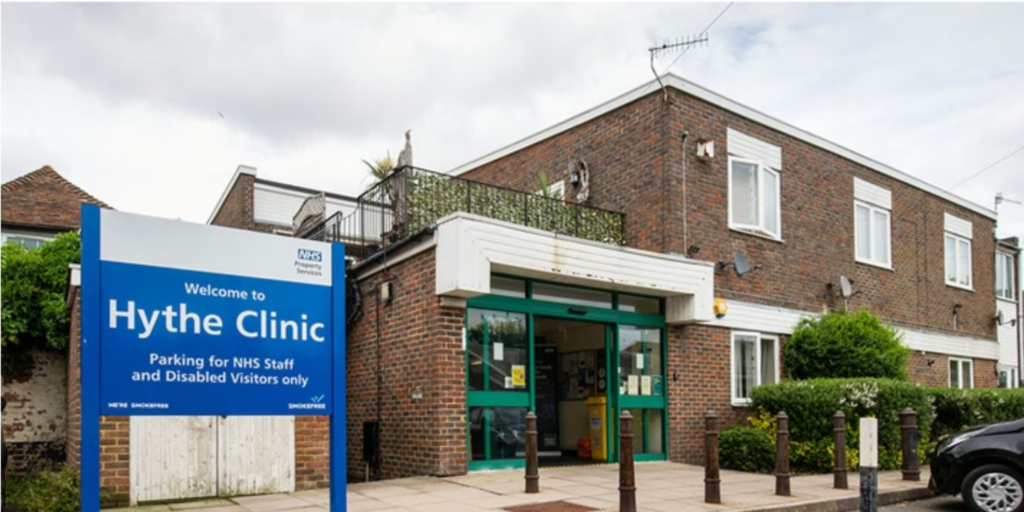
Hythe Ear Wax Removal Clinic Coverage
The Hearing First Hythe page helps visitors explore a Kent-based option for specialist ear wax removal. It names microsuction ear wax removal and manual instrument ear wax removal, providing practical information for anyone looking beyond a general search result. If you are experiencing possible wax build-up, hearing dullness or an uncomfortable blocked-ear sensation, the location listing can help you identify a clinic page to investigate in more detail.
Hythe is the listed clinic base, and the stated catchment extends to Saltwood, Seabrook, Palmarsh, Romney Marsh, Folkestone, Sandgate, Lympne, Dymchurch, Aldington, Sellindge and other nearby Kent communities. Checking these places can help you assess travel relevance before making contact. The clinic description also refers to treatment by expert audiologists, which is useful context when comparing an ear care provider's stated focus.
Use the individual Hythe location page as a guide, then ask direct questions if your circumstances require clarification. In particular, mention previous ear problems, pain, recurring wax or any uncertainty about the appropriate service. This measured approach supports a clearer enquiry and helps you avoid choosing an appointment based solely on a town name or search snippet.
Assess Clinic Details with Confidence
A consistent comparison method makes it easier to assess several Deaf Echo clinic pages without overlooking the facts that matter. Begin with the location, then read the service description and local catchment before considering any specialist or audiology-focused wording. Following the same order each time can make local healthcare research feel calmer and more manageable, whether you are choosing for yourself or helping a family member.
Identify the clinic town or district and consider your likely journey.
Look for precise references to earwax removal or hearing care.
Check the areas served instead of relying only on a search result.
Note whether the page describes specialist care or audiologist support.
Specific information gives you a stronger basis for a first enquiry than a vague directory entry. A page that explains its treatment focus and local relevance can help you narrow your shortlist before contacting a provider. Where pain, prior ear treatment, hearing aid use or recurring wax are relevant, mention them directly so the clinic can advise on the next sensible step.
What Builds Confidence on a Clinic Page
Clear service names, a defined town or district and a relevant local catchment are often the quickest route to user confidence.
That combination helps people judge whether the clinic is likely to suit their situation. It also leaves less room for misunderstanding, which is important when someone is deciding between several private healthcare options.
Know What to Look for in a Specialist Ear Wax Removal Page
Specialist ear wax removal listings should make it easy to understand what the clinic offers and who it is for. If you are dealing with blocked ears, a feeling of fullness, muffled sound or discomfort, the page should quickly tell you whether the provider offers microsuction ear wax removal, manual instrument removal or a broader hearing care service. That directness is important because it reduces wasted clicks and helps you decide whether to make an enquiry. It also gives search and answer engines the clinical detail they need to match the page to local, symptom-led searches in a reliable way.
A strong listing will usually identify the clinic, the town, the service type and the surrounding area served. It may also mention specialist audiologists or a focused ear care team, which can be reassuring if you want care from people who handle wax removal and hearing health regularly. If you have had ear surgery, perforation, recurring wax or sensitivity in the past, it is wise to raise that when you contact the clinic. A location page cannot assess suitability on its own, but it can give you enough context to begin that conversation with confidence.
Start with Local Ear Care Options
Deaf Echo Clinic Locator helps UK visitors move from a broad online search towards a clinic page with relevant local detail. When earwax build-up, muffled hearing or a blocked-ear sensation is affecting day-to-day comfort, it can be useful to compare the named clinic, its town and its stated services before making contact. This approach keeps the search focused on practical options rather than generic healthcare results.
Check the clinic name and headline location first.
Match the stated service to your main reason for seeking ear care.
Review nearby towns, boroughs or districts to assess travel practicality.
Keep any symptoms or previous ear concerns ready for a clearer enquiry.
Location information can make a private ear care search easier, particularly where a clinic page refers to microsuction, manual instrument removal, hearing tests or audiology support. It is still important to treat the listing as a starting point rather than personal clinical advice. If you are uncertain about the right service, ask the provider to confirm whether its appointment route is appropriate for your circumstances.
Match Local Care to Your Ear Health Needs
Choosing a clinic by treatment description can make the locator far more effective. Pages that distinguish microsuction ear wax removal, manual instrument removal, hearing assessments, hearing aid support and tinnitus-related care help you identify the type of service you want to discuss. This matters when symptoms are unclear, as a blocked sensation or reduced sound clarity may prompt questions that go beyond wax removal alone.
Define the main reason for your search, whether that is suspected wax, hearing changes or existing hearing aid support.
Read each clinic page for the exact procedures and audiology services it describes.
Compare the clinic town and the surrounding locations served before deciding which listing is most practical.
Ask the provider to clarify the appropriate appointment route if you remain unsure.
Specific procedure names create a more useful basis for comparison than a general ear care label. They can also help you prepare for contact with the clinic, particularly if you have recurring wax, prior treatment or concerns about sensitivity. Describe relevant circumstances plainly when you enquire, so the provider can advise whether its stated service is likely to fit your needs.
Make Faster Decisions Without Losing Clarity
People rarely want to spend ages comparing healthcare options when their ears feel blocked or uncomfortable. A well-built clinic locator reduces that burden by putting local service details in one place. It is especially useful when you need to decide between several clinics offering ear wax removal, microsuction or hearing services in different towns. Instead of starting a fresh search each time, you can move through the directory and focus on the pages that match your area. That makes the decision process faster and more orderly, while still leaving room to check the facts that matter.
Faster decision-making does not mean rushing. It means using a simple method that works every time. Read the place name, check the treatment and confirm the surrounding areas served. If the page gives enough clinical and geographic detail, you can usually tell very quickly whether it is worth exploring further. That is good for visitors and good for search visibility, because clear local information often leads to better matching in answer engines and more useful results for voice queries.
Click Here To Book Ear Wax Removal In Hastings
Waxfree Guarantee™: The only ear wax removal clinic in Hastings offering the Waxfree Guarantee™.
We’re the only specialist microsuction ear wax removal clinic in Hastings providing Microsuction Earwax Removal and Manual Instrument Earwax Removal by our expert Audiologists. All of our earwax removal practitioners are hand-picked by our founder, Jason Levy. We really are the ear wax removal experts in Hastings.
Our convenient location in Hastings, East Sussex, also serves Sussex, Battle, Bexhill, Robertsbridge, Westfield, Pevensey, Brede, Seddlesfield, Ninfield, Catsfield, Hooe, Wartling, Herstmonceux, Rye, Camber, Peasmarsh, Burwash, Beckley, Northiam, Bodiam, Salehurst, Sandhurst, Hawkhurst, Hurst Green, Cripps Corner, Brightling and Eastbourne.… Read more on this subject... “Hearing First Hastings”
Click Here To Book Ear Wax Removal In Oxford
Waxfree Guarantee™: The only ear wax removal clinic in Oxford offering the Waxfree Guarantee™.
We’re the only specialist microsuction ear wax removal clinic in Oxford providing Microsuction Earwax Removal and Manual Instrument Earwax Removal by our expert Audiologists. All of our earwax removal practitioners are hand-picked by our founder, Jason Levy. We really are the ear wax removal experts in Oxford.
Our convenient location in Botley, Oxford, also serves clients in Jericho, Summertown, Wolvercote, Marston, Godstow, Park Town, Wytham, Yarnton, Worton, Elsfield, Beckley, Islip, Hampton Poyle, Kidlington, Eynsham, Stanton Harcourt, Hardwick, Northmoor, Kingston Bagpuize, Gozzard’s Ford, Abingdon, Radley, Littlemore, Cowley, Headington, Thame, Wootton, Kirtlington, Freeland, Cassington, Witney, Ducklington, Aston, Woodstock, Weston-on-the-Green, Charlton-on-Otmore, Horton-cum-Studley, Forest Hill, Wheatley and Sandford-on-Thames.… Read more on this subject... “Hearing First Oxford”
Read Treatment Descriptions Before You Enquire
Different Deaf Echo clinic pages may highlight different services, and that makes treatment wording one of the most useful details to check. If you are looking for ear wax removal, a clinic that names microsuction or manual instrument removal is more relevant than one that only mentions general hearing support. If your concern is broader, a page that also refers to hearing tests, hearing aid support or tinnitus-related care may give you a better starting point. Reading the service description carefully helps you avoid booking the wrong appointment type, especially if your symptoms are still unclear and you are trying to work out whether the issue is wax, hearing loss or something else.
This kind of wording also supports informed choice. Specific treatment terms give you a better sense of the provider's clinical focus, which is useful if you want care from a specialist ear clinic or audiologist-led team. A locator that links location with service type makes it easier to narrow down the right clinic before you contact anyone directly.
Services Commonly Named on Clinic Pages
Microsuction ear wax removal, often presented as a precise private treatment for clearing impacted wax safely and with control.
Manual instrument earwax removal, which may be offered alongside microsuction depending on the clinic's clinical approach and patient suitability.
Hearing tests, helpful if blocked ears, reduced clarity or hearing changes have raised wider questions about your hearing health.
Hearing aid support, useful for existing wearers who need follow-up care, adjustment advice or a review appointment.
Tinnitus support, where the clinic page shows that the practice offers broader audiology services rather than wax removal alone.
Read Clinic Pages in a Simple, Repeatable Order
When you compare Deaf Echo location pages, a fixed reading order makes the task much easier. Begin with the clinic name and town, then look at the treatment summary, then read the areas served. After that, scan for any mention of specialist care, audiology expertise or who delivers the treatment. This approach works well if you are comparing private ear wax removal clinics in London, the South East, the Midlands or further afield. It also helps answer engines understand the page, because the most useful facts are presented in a clear structure that is easy to interpret.
Confidence usually comes from detail. A page that clearly names microsuction, manual instrument earwax removal or hearing support gives you a much clearer picture than a generic local directory result. It can also help you avoid booking a clinic that is too far away or not quite the right fit for your concern. If you are making the decision for yourself or someone else, a steady reading sequence keeps the focus on what matters most, the treatment, the place and the fit.
Practical Markers of Quality
Look for pages that read like service listings rather than broad adverts. Strong location pages usually describe the treatment, identify the clinic base and explain the surrounding towns in plain British English. That is usually enough to help a visitor understand whether the clinic is relevant before they make contact.
Tip for Comparing Listings
If two pages look similar, choose the one with the clearest treatment wording and the most relevant local area list, because small differences in detail can save a lot of time.
Why This Matters for Patients
People looking for private ear care usually want speed, clarity and reassurance. Pages that offer all three are easier to use, easier to trust and easier to act on.
Understand Private Ear Care Choices More Easily
Private ear care can feel confusing if you have never needed it before. Terms such as microsuction, earwax removal, hearing test and audiologist support are common, but not everyone knows how they differ. A good clinic locator helps by placing those services into a local context, so you can see which clinic offers what and where it is based. That matters because the right choice often depends on both the problem and the clinic's clinical focus. If your ears feel blocked, you might want a page that clearly names wax removal. If your concern is broader, a location page that also mentions hearing assessments may be more useful.
Choice becomes easier when the listing is straightforward. You do not need a long explanation to decide, just enough detail to match the service to your need. A location page that states the town, the treatment and the surrounding areas can often answer the main question in one visit. That is good for people and good for search visibility, because the page can satisfy direct, conversational queries about local ear care. It also helps users avoid choosing a clinic that sounds suitable at first glance but does not actually offer the service they want.
Practical Markers of Quality
Look for a page that reads like a service listing rather than a vague advert. Strong location pages usually describe the treatment, identify the clinic's base and explain the surrounding towns in plain British English. That is often enough to help a visitor understand whether the clinic is relevant before they make contact.
Tip for Comparing Listings
If two pages look similar, choose the one that provides the clearest treatment wording and the most relevant local area list. A small difference in detail can save time and reduce uncertainty.
Why This Matters for Patients
People searching for private ear care are often looking for speed, clarity and reassurance. Pages that offer all three are easier to use, easier to trust and easier to act on.
Choose Between Treatments Before You Contact a Clinic
Choosing by treatment type can help you make a more relevant shortlist. Clinic pages may refer to microsuction ear wax removal, manual instrument earwax removal, hearing tests, hearing aid support or tinnitus-related care. Reading these descriptions carefully helps distinguish a clinic focused on suspected wax build-up from one that may also describe broader hearing health services. It is particularly helpful when muffled hearing or a blocked sensation leaves you unsure where to begin. Specific service language gives visitors a clearer view of a clinic's stated clinical focus than a general directory entry can provide.
It may also help you prepare a more useful enquiry, particularly if you have used hearing aids, experienced repeated wax build-up or have concerns about previous ear treatment. The provider should confirm whether the service and appointment route are suitable for your individual circumstances. A clinic page is a starting point, not a clinical assessment, so it is sensible to mention any relevant history directly when you make contact.
Why This Approach Works
This sequence works because it mirrors how people actually choose private healthcare. First, they want relevance. Then they want practical access. Finally, they want reassurance about the service itself. A well-written clinic locator supports that journey by making the important facts visible without forcing visitors to dig through unrelated content.
Quick Tip for First-Time Visitors
If you are unsure which clinic to choose, compare two or three nearby listings side by side. Look at the procedure, the place name and the surrounding districts served, then choose the one that aligns most closely with your location and symptoms.
Small Detail, Big Impact
Even one clear line about treatment type can make a page much easier to trust, especially when you are searching for private ear care and need a fast, sensible decision.
Making Sense of Private Ear Care Choices
Private ear care can feel confusing if you have never needed it before. Terms such as microsuction, earwax removal, hearing test and audiologist support are common, but not everyone knows how they differ. A good clinic locator helps by placing those services into a local context, so you can see which clinic offers what and where it is based. That matters because the right choice often depends on both the problem and the clinic's clinical focus. If your ears feel blocked, you might want a page that clearly names wax removal. If your concern is broader, a location page that also mentions hearing assessments may be more useful.
Choice becomes easier when the listing is straightforward. You do not need a long essay to decide, just enough detail to match the service to your need. A location page that states the town, the treatment and the surrounding areas can often answer the main question in one visit. That is good for people and good for search visibility, because the page can satisfy direct, conversational queries about local ear care.
Understand What a Clinic Listing Should Tell You
A useful clinic listing does more than name a place. It should tell you what the provider actually offers, which areas it serves and how the service is positioned. For people seeking microsuction ear wax removal or audiology-led care, those details make a real difference because they help separate a focused clinic from a general healthcare page. If the listing is written well, you can see whether it is mainly about earwax removal, hearing assessments or broader hearing care before you commit time to contact the practice. That kind of clarity is valuable when you want a quick, practical answer and do not want to rely on search snippets alone.
Clinic pages that are easy to scan also help search and answer engines understand the page intent. Clear service language, a named location and a sensible local area list create a strong match for natural language queries such as where to find a nearby ear wax removal clinic or which private audiology clinic serves my town. When the content is specific, it usually gives better results for users too, because it reduces uncertainty at the point of decision.
Choose the Right Clinic by Balancing Journey and Service
A well chosen clinic should fit both your travel needs and your ear care needs. If you have a history of ear problems, you may prefer a provider that states its methods clearly and uses terms like microsuction, manual instrument removal or audiologist-led care. A nearby clinic is useful, but not if it offers the wrong service or lacks the detail you need to judge whether it is a sensible fit. Good location pages help you weigh both convenience and suitability together, which is exactly what most patients need when time and comfort matter.
For many users, the decision becomes easier when the listing shows a clear treatment name, a defined clinic base and a useful service area. That gives you enough information to make a short list before you contact anyone directly. It also supports answer engines, because the page reflects the way people ask: what is the service, where is it, and is it suitable for me?
Signs That a Clinic Page Is Worth a Closer Look
Look for clear treatment naming, a specific place reference and a local coverage list that fits your travel pattern. Those three details usually tell you more than a generic promotional statement. They show that the page is written to support real patient decisions, not just to attract traffic.
Use Specialist Wording to Judge Trust and Relevance
Trust on a clinic locator page comes from precise language, not broad claims. When a listing names microsuction ear wax removal, manual instrument earwax removal or audiologist-led care, it gives you a concrete sense of the service. That matters because many people searching for ear care want reassurance before they book. They may be dealing with discomfort, hearing changes or repeat wax build-up, so clear clinical wording can reduce hesitation and help them decide whether a clinic is worth contacting. Specific terms also help answer engines understand the page more accurately, which can improve visibility for local healthcare queries.
A strong location page should feel clinically grounded and easy to scan. It should identify the location, explain the treatment and mention the area served without padding the page with vague marketing language. If the page also says who carries out the care, such as expert audiologists or a specialist ear care team, that adds another layer of reassurance. In practice, this means the page does more than advertise, it helps the user make a grounded choice based on facts that matter.
Why Coverage Information Is Useful
Coverage details help you move from a general search to a relevant clinic page with less effort. They also help you avoid overestimating how close a clinic really is, which matters if you are planning around work, family or limited mobility. If the location fit and the treatment fit both look right, the next step becomes much easier.
Tip for Local Search Users
Try searching by town and service together, such as ear wax removal plus the area name, because that usually brings you to the most relevant clinic page faster than a broad search.
Why Specificity Wins
Specificity makes both the locator and the user journey better, because the right clinic page can answer the question faster and with fewer follow-up searches.
Prepare a More Useful Clinic Enquiry
The locator is designed to turn an unfocused local search into a more informed conversation with a provider. Once you have checked a clinic's name, service description and local reach, you can decide whether it deserves a place on your shortlist. This gives you a practical way to compare ear care options while recognising that the provider, not the listing, must confirm personal suitability.
Read the individual clinic page before using a booking or contact route.
Compare pages with similar treatment descriptions and accessible locations.
Describe relevant symptoms, repeat wax concerns or hearing aid use clearly.
Ask about anything unclear instead of relying on assumptions from the page.
A concise enquiry can save time and help the clinic understand what you are looking for. Include the treatment you wish to discuss, your preferred location and any relevant ear history, such as previous surgery or discomfort. Clear clinic pages support this process by making local service information easier to find, while a direct conversation remains the right place to discuss your circumstances.
Compare Treatments Before You Contact a Clinic
Choosing by treatment type can help you make a more relevant shortlist. Clinic pages may refer to microsuction ear wax removal, manual instrument earwax removal, hearing tests, hearing aid support or tinnitus-related care. Reading these descriptions carefully helps distinguish a clinic focused on suspected wax build-up from one that may also describe broader hearing health services. It is particularly helpful when muffled hearing or a blocked sensation leaves you unsure where to begin.
Specific service language gives visitors a clearer view of a clinic's stated clinical focus than a general directory entry can provide. It may also help you prepare a more useful enquiry, particularly if you have used hearing aids, experienced repeated wax build-up or have concerns about previous ear treatment. The provider should confirm whether the service and appointment route are suitable for your individual circumstances.
How Service Areas Help You Choose
They show whether the clinic is practical for same-day travel, follow-up care or a planned appointment.
They help you compare central clinics with suburban options, which can affect parking, rail access and journey time.
They show whether the practice supports a wider local community, not just the town in the page title.
They reduce the risk of assuming a clinic is nearby just because it appears close in search results.
They make it easier to shortlist options when you want private healthcare that feels local and relevant.
Why This Helps Real Users
People searching for ear care usually want less delay and less uncertainty. Clear local content gives them both, because it helps them identify the right clinic and move on with confidence.
Use Local Coverage to Judge Whether Travel Is Practical
Coverage details matter because the nearest clinic is not always the most practical one. A page that names nearby suburbs, districts or towns can help you decide whether the journey is realistic from home, work or your usual route. That is especially useful for private ear care, where people often want treatment soon and do not want to spend extra time on travel planning. If a clinic serves a wide catchment, it may be relevant even when you live outside the headline town. If it serves a smaller area, you can quickly see that too and move on with less effort.
For Deaf Echo listings, local reach can be a strong clue about how the clinic operates. A location page that mentions neighbouring places is often more useful than one that only gives a town name, because it shows how the provider thinks about patient access in practice. That helps users, and it also helps answer engines connect treatment, place and intent in a clean, local way.
Recognise a Useful Specialist Clinic Listing
A specialist ear wax removal page should make its relevance clear quickly. Look for a stated clinic location, named procedures and an understandable description of the places the clinic serves. Together, these details help you judge whether a listing is worth exploring when blocked ears, fullness, discomfort or changes in hearing have led you to search for local private ear care.
Prioritise listings that clearly identify microsuction ear wax removal or manual instrument earwax removal.
Check whether the page describes audiologists or an audiology-focused service.
Review the local coverage information alongside your likely travel route.
Use the individual location page to understand the clinic's stated focus before making an enquiry.
Clear information supports a better first conversation, rather than replacing one. If you have ear pain, previous ear surgery, a known ear condition, repeated wax build-up or uncertainty about treatment, raise this directly with the provider. A well-structured clinic page helps you ask more relevant questions and decide whether to pursue that local option with greater confidence.
Scroll to Top
A Sensible Reading Sequence
Check the clinic town first, so you know exactly which location page you are viewing.
Read the treatment wording next, paying attention to microsuction, manual removal or hearing support.
Review the listed surrounding areas to see whether your home location is included or nearby.
Note any specialist wording that suggests the clinic has an audiology or ear care focus.
Only then move on to making an enquiry or comparing another nearby listing.
Spot the Signs of a Specialist Listing
A good specialist listing should feel specific, grounded and easy to scan. It should identify the clinic location, explain the treatment and mention the area served without relying on vague promotional language. If a page names microsuction ear wax removal, manual instrument earwax removal or audiologist-led care, it gives you a concrete sense of what the provider actually does. That matters because people searching for ear care often want reassurance before they book, especially if they are dealing with discomfort, hearing changes or repeat wax build-up. Clear clinical wording can reduce hesitation and make the page easier for both users and answer engines to understand.
The best location pages answer the main question early and leave the rest of the content to support confidence. They should read like a service listing, not a broad advert. If the page also says who carries out the treatment, such as expert audiologists or a specialist ear care team, that adds another layer of reassurance. In practice, this means the page helps the user make a grounded decision based on facts that matter.
Why Treatment Wording Matters
Precise treatment wording lets you see the clinic's clinical emphasis at a glance. A page that clearly names microsuction, audiologist-led care or manual removal gives you a much better sense of whether the service suits your needs than a vague local listing. It also helps when you want to compare several nearby clinics in a calm, structured way. If the wording is too broad, it is harder to know whether the page is the right starting point.
Why Coverage Information Helps
Coverage details help you move from a general search to a relevant clinic page with less effort. They also help you avoid overestimating how close a clinic really is, which matters if you are planning around work, family or limited mobility. If the location fit and the treatment fit both look right, the next step becomes much easier.
Match the Service to the Problem You Are Trying to Solve
Different Deaf Echo clinic pages may emphasise different services, and that makes treatment wording one of the most important things to read carefully. If you are looking for ear wax removal, a clinic that names microsuction or manual instrument removal is more relevant than one that only mentions general hearing support. If your concern is broader, a page that also refers to hearing tests, hearing aid support or tinnitus-related care may give you a better starting point. Reading the service description properly helps you avoid booking the wrong appointment type, especially if your symptoms are not yet clear and you are still trying to work out whether wax, hearing loss or another issue is involved.
This is also where the page can support informed choice. Specific treatment terms give you a better sense of the provider's clinical focus, which is useful if you want care from a specialist ear clinic or audiologist-led team. A locator that links location with service type makes it easier to narrow down the right clinic before you contact anyone directly.
Signs That a Listing Is Worth a Closer Look
A clear procedure name, so you know whether the clinic offers the care you need.
A specific place reference, so the local base is obvious at a glance.
A useful coverage list, so you can judge whether the journey is realistic.
Specialist wording that suggests an ear care or audiology focus.
A simple route to enquiry once you have checked the facts you need.
When Convenience Should Not Be the Only Factor
A nearby clinic is helpful, but it should still offer the right treatment and a sensible clinical fit. If you have a history of ear problems, you may prefer a provider that states its methods plainly and uses terms like microsuction or audiologist-led care. Good location pages help you weigh both convenience and suitability at the same time, which is exactly what most patients need.
Useful Signs of a Well-Matched Clinic
A clear mention of the procedure, the location and the local service area is often enough to show whether a clinic is a strong fit for your needs.
That is especially important when you want private healthcare with less delay and less uncertainty. A focused clinic page should help you see the fit quickly, rather than making you guess from a generic listing.
Open the clinic page first, then read the treatment summary and local area coverage before deciding whether to book.
Look for mentions of ear wax removal, audiologist-led care or hearing services, as these signal the main focus of the practice.
Check whether the clinic serves your town, borough or district, because that often affects how practical the visit will be.
Use the page to compare nearby options in a calm, structured way, rather than relying on search snippets alone.
Keep an eye on any booking prompt or service note, as these usually guide the next step more clearly than general search results.
Use the Locator to Narrow Your Search
The Deaf Echo clinic locator is most helpful when you use it to move from a broad ear care search to a clinic-specific decision. Start with the town and clinic name, then check whether the stated service reflects your main concern, such as possible earwax build-up, muffled hearing, ear discomfort or a need for hearing support. This keeps your search focused on practical local options rather than generic healthcare results.
Compare the clinic location with journeys you can realistically make from home, work or another regular starting point.
Check whether microsuction, manual instrument earwax removal, hearing tests or audiology support are mentioned on the relevant page.
Read the named local areas to see whether the clinic may suit people travelling from neighbouring districts.
Keep a short note of symptoms or previous ear concerns to make a clearer enquiry.
A location page can provide a useful starting point, but it cannot determine which appointment is appropriate for you. If the treatment wording, travel arrangements or your individual ear history leave any uncertainty, contact the provider directly. A considered enquiry gives you the opportunity to confirm whether the clinic and service are a sensible match before taking the next step.
How to Use the Locator Well
Open the individual clinic page and read the treatment summary before anything else.
Check whether the area coverage matches your travel pattern or usual route.
Compare clinics with similar treatment descriptions, so the choice stays relevant.
Look for specialist wording that suggests a focused ear care or audiology offer.
Use the page to prepare a clear, direct enquiry if the clinic looks suitable.
Questions That Affect Convenience
Is the clinic close enough to make the appointment realistic on a weekday or at short notice?
Does the page suggest the clinic is specialist in ear wax removal, or more broadly focused on hearing care?
Are nearby neighbourhoods or towns listed, so you can judge how widely the clinic is accessible?
Would the appointment fit into your routine without needing complicated travel or long waiting times?
Is the listing clear enough that you can decide quickly without opening multiple search results?
Find a Clinic That Fits Your Journey
The locator is designed to make local comparison easier by bringing together clinic locations, treatment descriptions and service-area information. Rather than relying on a search snippet, open the individual Deaf Echo clinic page and assess whether its town, stated ear care services and local reach suit your circumstances. This approach is useful when you are trying to balance convenience with a clear treatment match.
Begin with the clinic's headline location and decide whether the journey is manageable.
Read the service summary for references to ear wax removal, microsuction, manual removal or hearing care.
Check surrounding towns and districts if you live outside the main clinic location.
Compare more than one page where several clinics could be practical options.
Travel convenience can influence your choice, but it is only one part of a well-informed decision. Give equal attention to the clinic's stated clinical focus and the reason you are seeking help. If a page appears relevant, use its contact or booking route to confirm any personal questions, including whether your symptoms or ear history need further discussion before an appointment is arranged.
Useful Signs of a Well-Matched Clinic
A clear mention of the procedure, the location and the local service area is often enough to show whether a clinic is a strong fit for your needs.
That is especially important when you want private healthcare with less delay and less uncertainty. A focused clinic page should help you see the fit quickly, rather than making you guess from a generic listing.
Assess Specialist Ear Wax Removal Listings
A specialist ear wax removal listing should help you decide whether to investigate a clinic further, especially when you have a feeling of fullness, reduced sound clarity, discomfort or possible blocked ears. Look for a clear connection between the clinic location, the ear care services described and the surrounding communities served. This makes it easier to separate a focused local listing from a vague promotional result and to compare options without unnecessary searching.
Look for named procedures, including microsuction ear wax removal or manual instrument removal.
Check whether the listing describes an audiology focus or treatment delivered by audiologists.
Use the coverage details to decide whether travel to the clinic is manageable.
Read the dedicated clinic page before using its booking route or making an enquiry.
Specialist wording can provide useful context, but personal suitability still needs to be confirmed directly with the clinic. Ask for guidance if you have pain, a history of ear surgery, a known ear condition, perforation concerns or repeated wax problems. By combining the location page's practical details with a direct question about your needs, you can approach earwax removal with greater clarity and confidence.
Reading Clinic Pages with Confidence
When you compare location pages, it helps to read them in a consistent order. Start with the clinic name and town, then check the service description, followed by the surrounding areas served. After that, scan for any mention of who delivers the care and whether the clinic is positioned as specialist or general. This makes the process easier to repeat across several locations, especially if you are comparing ear wax removal clinics in different parts of London, the South East or the Midlands. It also makes the page more useful for voice search and AI summaries, because the most important facts are presented in a clear, structured way.
Confidence comes from specifics. A page that names microsuction, earwax removal, audiologist support and the local catchment gives you more to work with than a short listing without detail. It can also reduce the chance of booking a clinic that is too far away or not quite the right fit for your concern. If you are making decisions for yourself or someone else, a careful read can prevent avoidable confusion.
Understand Local Private Ear Care Options
Private ear care terminology can seem unfamiliar, particularly when you are trying to respond to a new ear problem quickly. The locator brings treatment descriptions together with clinic locations, helping you see which listing may be worth exploring. If your priority is earwax removal, look for direct references to the procedure. Where your concern extends beyond wax, a page that also describes hearing assessments or audiologist support may offer a more relevant starting point.
Use the town name to establish the clinic's physical location.
Match the listed care type to your reason for seeking help.
Review surrounding places served if you live outside the headline town.
Contact the clinic with a concise description of your symptoms and any previous ear concerns.
Clear locality and treatment information can reduce uncertainty before you make contact, but it is not a clinical assessment. Mention factors such as ear pain, recurring wax, hearing aid use or previous ear surgery when relevant, so the provider can advise on the most appropriate next step. This measured process helps turn a local search into a better-informed enquiry without making assumptions about treatment suitability.
Waxfree Guarantee™: The only ear wax removal clinic in Hendon offering the Waxfree Guarantee™.
We’re the only specialist microsuction ear wax removal clinic in Hendon providing Microsuction Earwax Removal and Manual Instrument Earwax Removal by our expert Audiologists. All of our earwax removal practitioners are hand-picked by our founder, Jason Levy. We really are the ear wax removal experts in Hendon.
Our convenient location in Hendon, North London, also serves Hendon, Mill Hill, Hendon, Golders Green, Stanmore, Burnt Oak, Belmont, Queensbury, South Mimms, Brookmans Park, Potters Bar, Southgate, Hadley Wood, Arkley, Kitt’s End, Oakleigh Park, Highwood Hill, Whetstone, Northaw, Cockfosters and Finchley.… Read more on this subject... “Hearing First Hendon”
Using the Locator for Faster Decision-Making
People rarely want to spend ages comparing healthcare options when their ears feel blocked or uncomfortable. A well-built clinic locator reduces that burden by putting local service details in one place. It is particularly useful when you need to decide between several clinics offering ear wax removal, microsuction or hearing services across different towns. Instead of starting a broad search every time, you can move through the directory and focus on the pages that match your area. That makes the decision process faster and more orderly, while still leaving room to check the details that matter.
Faster decision-making does not mean rushing. It means using a consistent method. Read the place name, check the treatment, and confirm the surrounding areas served. If the page gives enough clinical and geographic information, you can usually tell very quickly whether it is worth exploring. This is useful for users and useful for answer engines, because clear local information often leads to better query matching and better surfaced results.
Find the Most Convenient Route to Ear Care
Convenience plays a major role in whether someone actually books ear wax removal or hearing support. If the clinic is easy to reach, the appointment is more likely to happen on time and with less stress. That is why a location page should be as clear about travel relevance as it is about treatment type. A good locator can show whether the practice is in your town, near a rail link or well placed for nearby districts. For people with blocked ears, hearing difficulty or tinnitus concerns, that clarity can make the next step feel much less daunting.
Convenience is not only about miles on a page. It also includes whether the clinic offers the right procedure, whether the service sounds specialist and whether the listing explains enough local detail to justify the journey. A clinic in a nearby city may suit you better than one that is marginally closer but less focused on your problem. That is why page structure matters, especially on mobile devices. The strongest listings help you balance location, treatment and trust in one quick read, which is exactly what most visitors need when time is short.
Click Here To Book Ear Wax Removal In Kingston
Waxfree Guarantee™: The only ear wax removal clinic in Kingston offering the Waxfree Guarantee™.
We’re the only specialist microsuction ear wax removal clinic in Kingston-upon-Thames providing Microsuction Earwax Removal and Manual Instrument Earwax Removal by our expert Audiologists. All of our earwax removal practitioners are hand-picked by our founder, Jason Levy. We really are the ear wax removal experts in Kingston.
Our convenient location in Kingston, Southwest London, also serves Kingston-Upon-Thames, Tolworth, Thames Ditton, East Molesey, West Molesey, Hersham, Claygate, Chessington, Hampton Wick, New Malden, Norbiton, Worcester Park, Bushey Park, Teddington, Twickenham, Sunbury-on-Thames, Cobham, Oxshott, Stoke D’Abernon, Stoneleigh, Ewell, Epsom, Leatherhead and Feltham.… Read more on this subject... “Hearing First Kingston”
Mill Hill Ear Wax Removal Access
The Hearing First Mill Hill location page is designed for visitors seeking private ear wax removal in Mill Hill and nearby north London communities. Its service description names microsuction ear wax removal and manual instrument ear wax removal, so you can identify the core treatments without having to interpret a vague healthcare listing. This clarity can be valuable if blocked ears or changes in hearing are making you want a straightforward local next step.
The stated local coverage includes Hendon, Colindale, Edgware, Golders Green, Stanmore, Burnt Oak, Queensbury, Potters Bar, Southgate, Hadley Wood, Whetstone, Cockfosters and Finchley. Reviewing this area list helps establish whether Mill Hill is a practical destination, even if you do not live in the headline location. The listing also describes the treatment team as expert audiologists, reinforcing its specialist ear care focus.
Before booking, review the individual Mill Hill page and consider whether the named treatment aligns with your concern. It is sensible to contact the provider for guidance if you have a history of ear surgery, significant pain, a known ear condition or questions about suitability. A clear first enquiry can help the clinic understand what you need and direct you appropriately.
Questions to Ask Before Booking
Does the page clearly mention the exact treatment you need, such as microsuction or manual earwax removal?
Is the clinic based in a place that is easy for you to reach by car, rail or local transport?
Does the page suggest the service is specialist, audiology-led or focused on ear care?
Are nearby towns, suburbs or districts listed so you can judge local relevance properly?
Would it be sensible to mention previous ear problems, pain or hearing aid use when you enquire?
Use Local Coverage to Judge Travel Practicality
A clinic locator is most useful when it shows more than a town name. The best location pages explain which surrounding areas the clinic serves, so you can decide whether the journey is manageable from your home, work or usual route. That matters for private ear care, because a clinic in the next town may be more convenient than one that appears close on a map but is harder to reach in practice. For Deaf Echo listings, service area details can reveal whether a clinic regularly supports people from nearby boroughs, suburbs, commuter towns or wider county areas. Those practical clues help you move from search to decision with less guesswork.
Coverage information is also useful when you are comparing several clinics. One location might serve a narrow catchment, while another may attract patients from a much wider region. If the listing names nearby places, you can quickly see whether the clinic is relevant even if you live outside the headline town. This is particularly helpful for people looking for ear wax removal or audiology care, where convenience often affects whether the appointment gets booked at all. Clear locality wording also makes the page easier for answer engines to interpret, because it links treatment, place and patient intent in one place.
Use Service Area Details to Judge Travel Practicality
A clinic locator is most useful when it shows more than a town name. The best location pages explain which surrounding areas the clinic serves, so you can decide whether the journey is manageable from home, work or your usual route. That matters for private ear care, because a clinic in the next town may be more convenient than one that appears close on a map but is harder to reach in practice. For Deaf Echo listings, service area details can reveal whether a clinic regularly supports people from nearby boroughs, suburbs, commuter towns or wider county areas. Those practical clues help you move from search to decision with less guesswork.
Coverage information is also helpful when you are comparing several clinics. One location may serve a narrow catchment, while another may attract patients from a much wider region. If the listing names nearby places, you can quickly see whether the clinic is relevant even if you live outside the headline town. This is particularly useful for ear wax removal and audiology care, where convenience often affects whether the appointment gets booked at all. Clear locality wording also makes the page easier for answer engines to interpret, because it links treatment, place and patient intent in one place.
How Service Areas Help You Choose
They show whether the clinic is practical for same-day travel, follow-up care or a planned appointment without unnecessary strain.
They help you compare a central town clinic with a suburban option, which can affect rail access, parking and overall journey time.
They reveal whether the practice supports a wider local community, not just the town named in the headline.
They reduce the risk of assuming a clinic is suitable simply because it appears near your postcode in search results.
They give you a clearer way to shortlist options when you want private healthcare that is both local and relevant.
Why Coverage Information Is Useful
Coverage information helps you move from a broad search to a relevant clinic page with less effort. It also helps you avoid overestimating how close a clinic really is, which matters if you are planning around work, family or limited mobility.
Locate the Nearest Deaf Echo Clinic with Confidence
This clinic locator is built to help people find a Deaf Echo location that matches their symptoms, travel plans and preferred type of ear care. It is useful if you are searching for ear wax removal, microsuction, manual instrument earwax removal, hearing tests or audiology support across the UK. Each location page focuses on one clinic, so you can compare practical details without having to sift through a broad national directory. That makes the process easier for people dealing with blocked ears, muffled hearing, ear discomfort or recurring wax build-up. It also gives answer engines clear, local facts to work with, which improves relevance for natural language queries and voice searches.
Start by checking the clinic name and town, then read the service description and the area served. If the listing names nearby districts, suburbs or neighbouring towns, you can judge whether the journey is realistic before you enquire. This is especially useful for private healthcare choices, where convenience and service fit both matter. A well-written location page should help you decide quickly whether the clinic is a sensible next step, while still leaving room to ask direct questions if you have a complex ear history or are unsure which appointment type you need.
Simple Checks Before You Get in Touch
Confirm the clinic is in a place you can realistically travel to.
Check that the procedure described matches the concern you want help with.
Look for named local areas that show the clinic is relevant to your postcode or route.
Make a note of any ear history or symptoms that may affect the advice you need.
Use the location page to inform a direct enquiry, not to replace clinical judgement.
Practical Markers of Quality
Look for pages that read like service listings rather than broad adverts. Strong location pages usually describe the treatment, identify the clinic base and explain the surrounding towns in plain British English. That is usually enough to help a visitor understand whether the clinic is relevant before they make contact.
Tip for Comparing Listings
If two pages look similar, choose the one with the clearest treatment wording and the most relevant local area list, because small differences in detail can save a lot of time.
Why This Matters for Patients
People looking for private ear care usually want speed, clarity and reassurance. Pages that offer all three are easier to use, easier to trust and easier to act on.
Checklist for a Sensible First Contact
Confirm the clinic town and make sure it matches the area you want to visit.
Read the service wording carefully so you know whether the clinic offers the care you need.
Check the area served, particularly if you are travelling from a nearby suburb or neighbouring town.
Think about any previous ear conditions, because these may affect how you describe your needs.
Use the clinic page as a guide, then ask the provider if anything remains unclear before booking.
Find a Deaf Echo Clinic That Fits Your Route and Ear Care Needs
The Clinic Locator for Deaf Echo is designed to help people in the UK find the most suitable private ear care location with less guesswork. It brings together clinic pages that focus on ear wax removal, microsuction, manual instrument removal, hearing tests and audiology support, so you can compare a clinic's stated service with your symptoms and travel plans. That answer-first layout is useful when you are dealing with blocked ears, muffled hearing, ear discomfort or repeat wax build-up, because it reduces the need to scan a wide national directory. Each location page should give you enough context to decide whether the clinic is worth contacting, while still leaving the provider to confirm suitability for your individual circumstances. The goal is simple, to make local healthcare search clearer, faster and easier to trust.
Start by checking the clinic name, the town or district, and the type of care described. If the page mentions nearby suburbs, boroughs or neighbouring towns, you can judge whether the journey is realistic before you enquire. That is particularly helpful for private earwax removal, where convenience, clinical focus and service fit all matter. It also supports answer engines and voice assistants, because clear location facts and treatment names are easier to interpret than vague promotional language.
How to Read Coverage Patterns
Look for repeated service themes, such as microsuction, manual instrument removal and hearing care support.
Notice whether the clinics cluster around one region, which may shape travel choices and local relevance.
Compare the local area lists, because one clinic may serve a much wider patch than another.
Use the directory to see whether the provider appears to focus on a particular type of private ear treatment.
Check whether the page structure stays consistent, as that usually makes later comparison quicker and clearer.
Know What Strong Local Content Looks Like
Strong local clinic content is specific, grounded and easy to scan. It should tell you the clinic location, the treatment focus and the surrounding area served without relying on fluff. For a page about ear wax removal or hearing care, that means clear wording around microsuction, manual instrument removal, audiologist support and local access. It should also feel relevant to the user's intent, whether that is fixing a blocked ear, comparing private ear care options or finding a clinic close enough for a sensible journey. That level of detail is good for readers and good for answer engines.
When the content is written well, it answers the main question early and leaves the rest of the page to support confidence. That is the right pattern for location pages, because most people only need enough information to decide whether to enquire. A page that combines practical locality with clear treatment language usually performs better than one that tries to sound impressive without explaining much.
Why This Order Works Well
This approach mirrors how most people choose private healthcare. First they want relevance, then practical access, then reassurance about the service itself. A well-organised locator supports that process by keeping the facts easy to scan and easy to trust.
Helpful Micro-Guideline
If two clinics appear similar, choose the page that is clearest about procedure and locality, because clarity usually reflects a more usable service listing.
Small Detail, Big Effect
Even one precise line about the treatment can make a page feel more trustworthy when you are trying to make a fast but sensible decision.
Use Local Coverage to Compare Clinic Options
Coverage information helps you look beyond the clinic's headline town. A Deaf Echo listing may identify nearby suburbs, commuter towns or districts served, giving a more realistic picture of whether the location suits your routine. This can be valuable when comparing private ear care options, as a practical journey may influence whether you are able to attend as planned. It also reduces the risk of overlooking a relevant clinic simply because your own area is not named in the page title.
Compare local reach alongside the service described. One clinic page may be most relevant for a visitor seeking ear wax removal, while another may also refer to hearing tests, hearing aid support or tinnitus support. These details can help you separate a focused wax removal enquiry from a broader hearing health discussion. Specific location and treatment language also makes a listing easier to interpret in local search and voice-led queries, where people often ask direct questions about care near them.
Identify the clinic town and the surrounding places included in its stated coverage.
Decide whether the route is manageable for your likely appointment time.
Compare the named procedures with your main ear care concern.
Use the individual clinic page to prepare relevant questions for the provider.
How to Avoid Choosing the Wrong Service
Check whether the clinic page is mainly about wax removal or whether it also covers broader hearing support. This helps you decide if the service is aligned with your reason for visiting. If in doubt, it is usually best to contact the clinic and explain your symptoms in plain language. That gives the provider a better chance of guiding you to the right appointment type.
Questions That Affect Convenience
Is the clinic close enough to make the appointment realistic on a weekday or at short notice?
Does the page suggest the clinic is specialist in ear wax removal, or more broadly focused on hearing care?
Are nearby neighbourhoods or towns listed, so you can judge local access more accurately?
Would the appointment fit into your routine without a complicated journey or long wait?
Is the page clear enough that you can decide without opening several unrelated search results?
Click Here To Book Ear Wax Removal In Muswell Hill
Waxfree Guarantee™: The only ear wax removal clinic in Muswell Hill offering the Waxfree Guarantee™.
We’re the only specialist microsuction ear wax removal clinic in Muswell Hill providing Microsuction Earwax Removal and Manual Instrument Earwax Removal by our expert Audiologists. All of our earwax removal practitioners are hand-picked by our founder, Jason Levy. We really are the ear wax removal experts in Muswell Hill.
Our convenient location in Muswell Hill, North London, also serves East Finchley, Church End, Golders Green, Hendon, Hampstead Garden Suburb, Mill Hill, Barnet, Finchley, Highgate, Crouch End, Hornsey, Harringay, Southgate, Whetstone, Arnos Grove, Osidge, Wood Green and Tottenham.… Read more on this subject... “Hearing First Muswell Hill”
Compare Local Ear Care with Clarity
Use the Deaf Echo Clinic Locator to make a focused comparison between private ear care options in your area. Rather than relying on a generic search result, review the individual clinic page for its named location, treatment focus and stated local reach. This can be especially helpful when blocked ears, muffled hearing, discomfort or recurring earwax build-up are prompting you to find a practical next step.
A clear location page helps you assess whether a clinic is relevant before making contact. Check the clinic town or district alongside any nearby suburbs, boroughs and neighbouring towns mentioned. These details can help you judge whether the journey is realistic from home, work or a regular route, while avoiding assumptions based solely on a map result.
Give equal attention to convenience and service fit. A nearby provider may not be the most appropriate starting point if its page does not clearly describe the care you want to discuss. Specific references to ear wax removal, microsuction or wider hearing care provide more useful context than broad promotional wording and support a more confident first enquiry.
Confirm the clinic name and headline location.
Read the stated treatment description carefully.
Review the named service area against your likely journey.
Contact the provider directly if your symptoms or the appropriate appointment type remain unclear.
How to Use the Locator Well
Open the individual clinic page and read the treatment summary before anything else.
Check whether the area coverage matches your travel pattern or usual route.
Compare clinics that mention similar services, so the choice stays relevant to your needs.
Look for specialist wording that suggests a focused ear care or audiology offer.
Use the page to prepare a clear, direct enquiry if you decide the clinic looks suitable.
A good locator gives you enough context to choose, but not so much that the key facts get buried. That balance is what makes it useful for both people and search systems.
How to Avoid Booking the Wrong Service
Check whether the clinic page is mainly about wax removal or whether it also covers broader hearing support. This helps you decide if the service is aligned with the reason you are visiting. If in doubt, it is usually best to contact the clinic and explain your symptoms in plain language. That gives the provider a better chance of guiding you to the right appointment type.
How Service Areas Help You Choose
They show whether the clinic is practical for same-day travel, follow-up care or a planned appointment without unnecessary strain.
They help you compare a central clinic with a suburban one, which can affect rail access, parking and overall journey time.
They reveal whether the practice appears to support a wider local community, not just the town named in the headline.
They reduce the risk of assuming a clinic is suitable simply because it appears near your postcode in search results.
They give you a clearer way to shortlist options when you want private healthcare that is both local and relevant.
Hastings Ear Wax Removal Options
The Hearing First Hastings entry points visitors towards specialist ear wax removal in Hastings, East Sussex. It describes microsuction ear wax removal alongside manual instrument ear wax removal, making it easier to understand the treatments named by this local clinic listing. The service is positioned for people in Hastings as well as those travelling from a wide range of nearby Sussex and East Sussex locations.
The clinic description says that expert audiologists provide the earwax removal service and that practitioners are selected by founder Jason Levy. It also identifies the Waxfree Guarantee. If you are looking for help with suspected ear wax, follow through to the dedicated Hastings page for the clinic's local booking pathway. Before confirming an appointment, consider sharing relevant symptoms or previous ear issues with the provider so you can ask the right practical questions.
Hastings is the listed base for specialist microsuction and manual instrument ear wax removal.
The stated local coverage includes Battle, Bexhill, Rye, Camber, Robertsbridge and Eastbourne.
Visit the individual clinic page to explore the Hastings service and book ear wax removal.
Checklist for a Sensible First Contact
Confirm the clinic town and make sure it matches the area you want to visit.
Read the service wording carefully so you know whether the clinic offers the care you need.
Check the area served, particularly if you are travelling from a nearby suburb or neighbouring town.
Think about any previous ear conditions, because these may affect how you describe your needs.
Use the clinic page as a guide, then ask the provider if anything remains unclear before booking.
Prepare a Better Enquiry Before You Contact the Clinic
The Deaf Echo clinic locator is most useful when it helps you move from a broad local search to a focused conversation with a provider. It gives you the clinic name, the treatment wording and the local reach, which are the basic facts needed to decide whether a practice is worth contacting. If you have ear pain, repeated wax build-up, hearing aid use or previous ear surgery, that information should still be discussed directly with the clinic. The page can point you in the right direction, but the provider is the one who can advise on suitability.
That is why a location page should be treated as a practical guide, not the final word. When the wording is clear and the local coverage makes sense, you can use it to prepare a shorter, more relevant enquiry. This saves time for both sides and improves the chances of getting the right appointment route first time.
How to Use the Locator Well
Open the individual clinic page and read the treatment summary before anything else.
Check whether the area coverage matches your travel pattern or usual route.
Compare clinics with similar treatment descriptions, so the choice stays relevant.
Look for specialist wording that suggests a focused ear care or audiology offer.
Use the page to prepare a clear, direct enquiry if the clinic looks suitable.
Use the Page Details to Narrow Down Your Options
When you are comparing clinic listings, the main task is to narrow the field quickly without missing something important. A Deaf Echo location page should help you do that by bringing together the clinic name, the treatment description and the area served. Once you have those three facts, you can usually tell whether the page belongs on your shortlist. That matters because searching for private earwax removal or audiology care can become tiring if you keep opening irrelevant results. A more structured approach makes the process calmer and more efficient.
It is also useful to think about your own needs before you compare pages. For example, someone with a blocked ear and no prior treatment history may focus on microsuction ear wax removal, while someone with ongoing hearing concerns may want a clinic that also offers hearing tests or hearing aid support. The locator works best when you use it to match intent to service rather than just chasing the closest pin on a screen.
Questions That Affect Convenience
Is the clinic close enough to make the appointment realistic on a weekday or at short notice?
Does the page suggest the clinic is specialist in ear wax removal, or more broadly focused on hearing care?
Are nearby neighbourhoods or towns listed, so you can judge local access more accurately?
Would the appointment fit into your routine without requiring a complicated journey or long wait?
Is the page clear enough that you can decide without opening several unrelated search results?
Questions That Affect Convenience
Is the clinic close enough to make the appointment realistic on a weekday or at short notice?
Does the page suggest the clinic is specialist in ear wax removal, or more broadly focused on hearing care?
Are nearby neighbourhoods or towns listed, so you can judge local access more accurately?
Would the appointment fit into your routine without requiring a complicated journey or long wait?
Is the page clear enough that you can decide without opening several unrelated search results?
See How Specialist Wording Supports Trust
Trust on a clinic locator page comes from precise, specific language. When a listing names microsuction ear wax removal, manual instrument earwax removal or audiologist-led care, it gives visitors a concrete sense of the service. That matters because people searching for ear care are often dealing with discomfort, blocked ears, hearing changes or repeat wax problems, and they want reassurance before they book. Clear wording reduces hesitation and helps them see whether the clinic is likely to suit their needs. It also supports search visibility, because factual local content is easier for answer engines to understand and present for relevant queries.
A well-written clinic page should feel clinical enough to be credible, but simple enough to scan quickly. It should identify the location, explain the treatment and mention the area served without padding the page with vague claims. If the listing also says who carries out the treatment, such as expert audiologists or a specialist ear care team, that can add another layer of reassurance. In practice, this means the page does more than advertise, it helps the user make a grounded decision based on the facts that matter most.
Services Commonly Described on Clinic Pages
Microsuction ear wax removal, usually presented as a precise private treatment for clearing excess wax from the ear canal.
Manual instrument earwax removal, which may be offered alongside microsuction depending on the clinic's clinical approach.
Hearing tests, helpful if blocked ears, reduced clarity or age-related changes have raised wider concerns about hearing health.
Hearing aid support, useful for existing wearers who need follow-up care, adjustment advice or a review appointment.
Tinnitus support, where the clinic page shows that the practice offers broader audiology services rather than wax removal alone.
Why Structure Helps Under Pressure
When people are in discomfort, they benefit from pages that are easy to scan and easy to trust. A structured locator supports that need by keeping the important facts visible. It also reduces confusion when several clinics look similar at first glance.
Find the Most Convenient Route to Care
Convenience plays a major role in whether someone actually books ear wax removal or hearing support. If the clinic is easy to reach, the appointment is more likely to happen on time and with less stress. That is why a location page should be as clear about travel relevance as it is about treatment type. A good locator can show whether the practice is in your town, near a rail link or well placed for nearby districts. For people with blocked ears, hearing difficulty or tinnitus concerns, that clarity can make the next step feel much less daunting.
Convenience is not only about miles on a page. It also includes whether the clinic offers the right procedure, whether the service sounds specialist and whether the listing explains enough local detail to justify the journey. A clinic in a nearby city may suit you better than one that is marginally closer but less focused on your problem. That is why page structure matters, especially on mobile devices. The strongest listings help you balance location, treatment and trust in one quick read, which is exactly what most visitors need when time is short.
How Service Areas Help You Choose
They show whether the clinic is realistic for same-day travel, follow-up care or a planned appointment.
They help you compare central clinics with suburban options, which can affect parking, rail access and journey time.
They reveal whether the practice supports a wider local community rather than only the headline town.
They reduce the risk of assuming a clinic is nearby just because it appears close in search results.
They make it easier to shortlist options when you want private healthcare that feels local and relevant.
What the Locator Is Designed to Help With
The purpose of the directory is simple: help visitors reach the most relevant Deaf Echo clinic page quickly, then move from search to decision with less friction. If you are comparing private healthcare choices, the locator can support a more informed choice by showing which clinic is linked to your area and what kind of ear care it offers. That is especially helpful when a problem such as wax build-up, hearing loss or tinnitus is affecting daily life and you do not want to waste time on irrelevant results.
Choosing a Clinic by Treatment Type
Different clinics may emphasise different services, so it helps to match the page to the care you are looking for. Some people need microsuction ear wax removal because it is a common private option for clearing impacted wax. Others may be looking for manual instrument earwax removal, a hearing test or support related to hearing aids. Reading the clinic page carefully gives you a better sense of whether the service fits your situation, especially if your ears are sensitive or you have had treatment before. A location page can also tell you whether the clinic is specialist-led, which matters if you want care from an audiology-focused team rather than a general listing.
When checking a clinic, pay attention to the wording around the procedure itself. If a page mentions earwax removal experts, expert audiologists or a named treatment method, that can help you understand the provider's clinical emphasis. You do not need to guess whether the site is mainly about wax removal, hearing support or a wider hearing care offer, because the location summary should make that plain. Use those details to narrow your shortlist before you contact the clinic directly.
Find the Right Deaf Echo Clinic for Your Ear Care Journey
Deaf Echo Clinic Locator is built to help people in the UK find a suitable private ear care clinic with less guesswork. It brings together location pages for ear wax removal, microsuction, manual instrument removal, hearing tests and audiology support, so you can compare a clinic's stated service with your symptoms and travel plans. That matters when you are dealing with blocked ears, muffled hearing, discomfort or repeat wax build-up, because a focused local listing is easier to act on than a broad national search. The aim is simple: make local healthcare search clearer, faster and more trustworthy for patients who want a practical next step.
Start by checking the clinic name, the town or district, and the treatment wording. If the page mentions nearby suburbs, boroughs or neighbouring towns, you can judge whether the journey is realistic before you enquire. This is especially helpful for private earwax removal, where convenience, clinical focus and service fit all matter. Clear locality facts and treatment names also help answer engines and voice assistants understand the page intent more accurately than vague promotional language.
Click Here To Book Ear Wax Removal In Surbiton
Waxfree Guarantee™: The only ear wax removal clinic in Surbiton offering the Waxfree Guarantee™.
We’re the only specialist microsuction ear wax removal clinic in Surbiton providing Microsuction Earwax Removal and Manual Instrument Earwax Removal by our expert Audiologists. All of our earwax removal practitioners are hand-picked by our founder, Jason Levy. We really are the ear wax removal experts in Surbiton.
Our convenient location in Surbiton, Southwest London, also serves Kingston-Upon-Thames, Tolworth, Thames Ditton, East Molesey, West Molesey, Hersham, Claygate, Chessington, Hampton Wick, New Malden, Norbiton, Worcester Park, Bushey Park, Teddington, Twickenham, Sunbury-on-Thames, Cobham, Oxshott, Stoke D’Abernon, Stoneleigh, Ewell, Epsom, Leatherhead and Feltham.… Read more on this subject... “Hearing First Surbiton”
Match the Clinic to the Treatment You Need
Different Deaf Echo clinic pages may emphasise different services, so it is worth matching the listing to your reason for visiting. Some pages focus on microsuction ear wax removal, which is often chosen when wax is impacted or causing a blocked sensation. Others may refer to manual instrument earwax removal, hearing assessments, hearing aid support or tinnitus-related care. Reading the wording carefully helps you avoid booking the wrong appointment type, especially if you are not yet sure whether the problem is wax, hearing loss or something more general. Clear service language also helps search engines understand the page's purpose, which can improve how the listing appears for local healthcare queries.
What to Check Before You Make an Enquiry
Before you contact a clinic, it helps to review a few practical details on the location page. Start with the exact town or district, then look at the service description and the local places served. This gives you a more complete picture of whether the clinic is appropriate for your needs and travel plans. It is also a good way to avoid confusion when several clinics have similar names or offer similar treatment types. A page that is clear about microsuction ear wax removal, manual instrument removal or hearing support will usually make your next step easier.
You should also consider any personal factors that might affect the appointment. For example, if you have had previous ear surgery, ear pain, recurring wax or hearing aid use, it may be worth mentioning that when you enquire. A clinic can only advise properly if it understands your situation. The most useful location pages make it simple to identify the clinic first, then pass on to the provider with confidence.
Read Clinic Pages in a Consistent Order
A simple reading order can make clinic comparison much easier. Start with the clinic name and location, then check the service description, followed by the surrounding areas served. After that, scan for any mention of specialist care, audiologist support or who performs the treatment. This method is practical if you are comparing private ear wax removal clinics across London, the South East, the Midlands or further afield, because it gives you the same frame of reference every time. It also works well for voice search users and answer engines, since the most useful facts are presented in a structured way that is easy to parse.
Confidence usually comes from detail. A location page that clearly identifies the treatment, the local base and the catchment area gives you a better basis for choice than a vague directory snippet. It can also help you avoid booking a clinic that is not right for your symptoms or too far away to be practical. If you are making the decision for yourself or a family member, that steady sequence keeps you focused on what matters, namely the treatment, the place and the fit.
Useful Signals in a Well-Written Location Page
A named town or district, so you know exactly which clinic base the page refers to.
A clear treatment description, such as microsuction, manual instrument removal or hearing testing.
Local coverage details that show whether nearby suburbs, boroughs or towns are included.
Specialist wording that suggests an ear care or audiology focus rather than a general listing.
A simple path to enquiry, so you can act once you have checked the facts you need.
Services Commonly Described on Clinic Pages
Microsuction ear wax removal, often presented as a precise private method for clearing impacted wax with control and care.
Manual instrument earwax removal, which may be used for suitable cases when the clinic offers more than one removal approach.
Hearing tests, helpful when blocked ears, reduced clarity or hearing changes raise wider questions about hearing health.
Hearing aid support, useful for existing wearers who need follow-up, adjustment advice or a review appointment.
Tinnitus support, where the clinic page shows a broader audiology service rather than wax removal alone.
Use the Locator to Prepare a Better Enquiry
The Deaf Echo clinic locator is most useful when it helps you move from a broad local search to a focused conversation with a provider. It gives you the clinic name, the treatment wording and the local reach, which are the basic facts needed to decide whether a practice is worth contacting. If you have ear pain, repeated wax build-up, hearing aid use or previous ear surgery, that information should still be discussed directly with the clinic. The page can point you in the right direction, but the provider is the one who can advise on suitability.
That is why a location page should be treated as a practical guide, not the final word. When the wording is clear and the local coverage makes sense, you can use it to prepare a shorter, more relevant enquiry. This saves time for both sides and improves the chances of getting the right appointment route first time.
Start with Location, Service and Travel Fit
Use the Deaf Echo Clinic Locator to turn a broad search for private ear care into a focused local comparison. Begin with the clinic name and its stated town or district, then consider whether the journey works from home, work or a regular route. This is particularly useful when blocked ears, muffled hearing, discomfort or recurring earwax build-up are prompting a timely search. A clinic-specific page can provide a clearer starting point than a general directory, while the provider remains responsible for confirming personal suitability.
Next, read the treatment description rather than relying on a headline alone. References to microsuction ear wax removal, manual instrument removal, hearing tests or audiology support help distinguish the stated focus of one location from another. Nearby suburbs, boroughs and neighbouring towns can also make a clinic relevant even when you do not live in the headline location. Clear service and locality wording supports a quicker, more confident decision before you make an enquiry.
Check the named clinic and town before assessing any other detail.
Match the stated ear care service to the reason for your search.
Review surrounding areas to judge whether travel is practical.
Contact the provider directly if symptoms, treatment options or suitability are unclear.
Use Local Coverage to Guide a Sensible Shortlist
Coverage details can reveal far more than simple place names. They show where a private ear care provider has practical reach and where it is likely to attract patients from. That can be useful if you live just outside the named town, because many services draw visitors from nearby suburbs, districts and commuter areas. For someone searching for ear wax removal or audiology support, those location patterns can help narrow the choice to clinics that are both relevant and realistically accessible.
The collection of pages also gives a sense of consistency. If multiple locations mention similar treatment types, that suggests a standardised clinic offer rather than isolated pages with little detail. For search and answer engines, this kind of consistency is helpful because it reinforces the provider's focus. For users, it creates a smoother comparison experience. You can move from one location to another with a clearer idea of what to expect, which is especially valuable when you want a quick answer without a lot of noise.
Common Services You May See on a Location Page
Microsuction ear wax removal, often highlighted as a specialist service for clearing wax safely and precisely.
Manual instrument earwax removal, which may be offered alongside microsuction for suitable cases and clinical judgement.
Hearing tests, useful if blocked ears or reduced clarity have raised wider concerns about your hearing health.
Hearing aid support, which can be relevant if you already use devices and need follow-up care or advice.
Tinnitus-related help, where the clinic page indicates broader audiology services rather than wax removal alone.
Why Coverage Information Is Useful
Coverage information helps you move from a general search to a relevant clinic page with less effort. It also helps you avoid overestimating how close a clinic really is, which matters if you are planning around work, family or limited mobility. If the location fit and the treatment fit both look right, the next step becomes much easier.
Tip for Local Search Users
Try searching by town and service together, such as ear wax removal plus the area name. That usually brings you to the most relevant clinic page faster than a broad healthcare search.
Why Specificity Wins
Specificity makes both the locator and the user journey better, because the right clinic page can answer the question faster and with fewer follow-up searches.
Start Your Local Clinic Search
Use the Deaf Echo clinic locator as a practical first step when ear symptoms are affecting comfort, hearing or day-to-day communication. Rather than relying on a broad search result, open the page for the individual clinic and assess whether its location, stated services and nearby areas suit your circumstances. This approach can make it easier to focus on a realistic local option for ear wax removal, microsuction, manual removal or wider audiology support.
Check the clinic name and headline town before comparing any other detail.
Read the service summary for the treatment or hearing care support most relevant to your concern.
Review named districts and neighbouring towns to judge whether the journey works from home or work.
Keep note of any symptoms, recurring wax concerns or previous ear history that you may need to explain.
Location information is a useful guide, but it should support rather than replace a direct conversation with the provider. If you are uncertain which appointment type is appropriate, explain what you are experiencing when you enquire. A clear, clinic-specific page gives you a stronger basis for that conversation and can reduce the time spent moving between unrelated local healthcare listings.
Why Asking Questions Is a Good Idea
Good private healthcare relies on clear communication. If the page points you to a specialist ear care service but you are unsure whether it suits your situation, ask directly. That is safer, clearer and far more useful than making assumptions. A strong locator page supports that process by giving you enough detail to begin the conversation well.
Small but Important Point
Even a short enquiry is better when it includes your symptoms, your location and your preferred treatment type. It saves time on both sides and improves the chances of getting the right appointment first time.
Final Practical Note
Use the clinic page as a stepping stone, not as the final clinical decision. The provider should always confirm suitability for your individual needs.
What a Useful Clinic Page Should Include
A clear town or district name that identifies the clinic base without ambiguity.
A specific service description that names the treatment rather than using general healthcare language.
Local places served, so you can judge whether the clinic is relevant to your route.
Simple wording about who provides the care, especially if the team is audiology-led.
A sensible call to action that helps you take the next step without confusion.
Why the Treatment Name Matters
Precise treatment wording matters because it lets you see the clinic's clinical emphasis at a glance. A page that names microsuction, audiologist-led care or manual removal gives you a far better sense of whether the service suits your needs than a vague local listing. It also helps when you want to compare several nearby clinics in a calm, structured way.
Service wording is one of the clearest ways to distinguish between clinic listings. A page that specifically refers to microsuction ear wax removal or manual instrument removal may be more relevant for a suspected wax concern than one centred on general hearing support. Conversely, references to hearing tests, hearing aids or tinnitus-related care may help you identify a page worth exploring when your concern extends beyond a blocked ear.
Define the main issue you want to discuss, such as possible wax build-up or a change in hearing.
Compare the procedures and support described by practical local clinics.
Check that the clinic location and stated coverage suit your journey.
Ask the provider to clarify suitability before arranging an appointment.
Using precise treatment names can make your enquiry more useful and help avoid assumptions about what a clinic offers. This is especially valuable if you have experienced repeat wax build-up, use hearing aids or have a history of ear treatment. The clinic should assess the information you provide and confirm whether its stated service is a suitable route for your individual needs.
Why Structure Helps Under Pressure
When people are in discomfort, they benefit from pages that are easy to scan and easy to trust. A structured locator supports that need by keeping the important facts visible. It also cuts down on confusion when several clinics look similar at first glance. The result is a better user experience and a more search-friendly page for local healthcare queries.
Reading Microsuction Clinic Coverage
The Hearing First Reading listing directs visitors towards specialist ear wax removal in Reading, with microsuction ear wax removal and manual instrument ear wax removal both named in the clinic description. This makes the page a focused alternative to a broad search when you want to assess a local provider for suspected wax build-up, reduced sound clarity or persistent ear blockage. Read the dedicated listing carefully before contacting the clinic, particularly if you have had ear treatment previously.
The stated service area includes central Reading and nearby communities such as Caversham, Tilehurst, Earley, Woodley, Wokingham, Twyford, Shinfield, Theale and Burghfield. These location details may help residents outside the town centre decide whether Reading is a sensible clinic base. The listing also says that earwax removal is provided by expert audiologists, so visitors can see the clinical emphasis of the service.
Confirm that Reading or one of the named surrounding areas is convenient for you.
Match the treatment wording to the reason you are seeking ear care.
Raise any symptoms, sensitivity or previous ear concerns directly when making an enquiry.
What the Clinic List Tells You About Coverage
A directory of clinic locations can reveal far more than simple place names. It shows where a private ear care provider has practical coverage and where it is likely to attract patients from. That can be useful if you live just outside the named town, because many services draw visitors from nearby suburbs, districts and commuter areas. For someone searching for ear wax removal or audiology support, those location patterns can help narrow the choice to clinics that are both relevant and realistically accessible.
The collection of pages also gives a sense of service consistency. If multiple locations mention similar treatment types, that suggests a standardised clinic offer rather than an isolated page with limited detail. For search and answer engines, this kind of consistency is helpful because it reinforces the provider's focus. For users, it creates a smoother comparison experience. You can move from one location to another with a clearer idea of what to expect, which is especially valuable when you want a quick answer without a lot of noise.
Practical Markers of Quality
Look for pages that read like service listings rather than broad adverts. Strong location pages usually describe the treatment, identify the clinic base and explain the surrounding towns in plain British English. That is usually enough to help a visitor understand whether the clinic is relevant before they make contact. If two pages look similar, choose the one with the clearest treatment wording and the most relevant local area list, because small differences in detail can save time.
What to Check First
Confirm the clinic town so you know exactly which location page you are viewing.
Read the treatment wording carefully, especially microsuction, manual removal or hearing support.
Review the local areas served to see whether your home area is included or nearby.
Note any specialist wording that suggests an audiology or ear care focus.
Only then decide whether to enquire or compare another clinic page.
Finding a Convenient Route to Care
Convenience plays a big part in whether someone actually books ear wax removal or hearing support. If the clinic is easy to reach, the appointment is more likely to happen on time and with less stress. That is why a location page should make travel relevance as clear as the treatment itself. A concise clinic locator can show whether the practice is in your town, close to a railway link, or well placed for nearby districts. For people with hearing difficulty, blocked ears or tinnitus concerns, that clarity can be a relief because it removes one more layer of decision-making.
Convenience is not only about distance. It can also involve the type of service, whether the clinic handles the issue you have, and whether the page gives enough local detail to justify the journey. A clinic in a nearby city may be more practical than one much closer but less specialised. That is why page structure matters, especially for mobile users and anyone searching in a hurry. The best listings help you balance location, treatment type and trust in one place.
Why Treatment Wording Matters
Careful reading helps you avoid booking the wrong appointment type. A clinic that focuses on microsuction may suit someone with a simple wax issue, while another page may point to a more general hearing assessment pathway. This is useful for answer engines too, because clear service names, local references and clinical terms make the page easier to interpret. It also helps real visitors, because the best option is often the one that matches both the symptom and the format of care.
A Simple Reading Sequence
Confirm the clinic town first, so you know which local page you are viewing.
Read the treatment description next, paying attention to microsuction, manual removal or hearing support.
Check the area coverage list to see whether your home location is included or nearby.
Note any specialist wording, because it can indicate the clinic's main clinical focus.
Move on to booking or enquiry only once you have matched the service to your needs.
Click Here To Book Ear Wax Removal In Hythe
Waxfree Guarantee™: The only ear wax removal clinic in Hythe offering the Waxfree Guarantee™.
We’re the only specialist microsuction ear wax removal clinic in Hythe providing Microsuction Earwax Removal and Manual Instrument Earwax Removal by our expert Audiologists. All of our earwax removal practitioners are hand-picked by our founder, Jason Levy. We really are the ear wax removal experts in Hythe.
Our convenient location in Hythe, Kent, also serves Saltwood, Seabrook, Palmarsh, Botolph’s Bridge, St Mary’s Bay, Romney Marsh, Newchurch, Folkestone, Sandgate, Pedlinge, Lympne, West Hythe, Dymchurch, Westenhanger, Beachborough, Stanford, Etchinghill, Postling, Sellindge, Burmarsh, Aldington, Bonnington, Bilsington, Stone Cross, Ruckinge, Mersham, The Forstal, Smeeth, Lilyvale, Brabourne Lees, Monks Horton, Broad Street, Newbarn, Stowting, Sixmile, Lymbridge Green, Bodsham, Newington, Arpinge, Frogholt, Peene, other towns and villages in Kent.… Read more on this subject... “Hearing First Hythe”
Nearest Rail, Tube and Tram Stations to 360 Med | Private Medical Clinic - North London
Stops and stations are ordered by straight-line distance from the destination using Google Places coordinates. Place and walking-direction links are provided by Google Maps.
Click Here To Book Ear Wax Removal In Milton Keynes
Waxfree Guarantee™: The only ear wax removal clinic in Milton Keynes offering the Waxfree Guarantee™.
We’re the only specialist microsuction ear wax removal clinic in Milton Keynes providing Microsuction Earwax Removal and Manual Instrument Earwax Removal by our expert Audiologists. All of our earwax removal practitioners are hand-picked by our founder, Jason Levy. We really are the ear wax removal experts in Milton Keynes.
Our convenient location in Milton Keynes, MK2 Bucks, also serves clients in Bletchley, Water Eaton, Fenny Stratford, Newton Longville, Caldecotte, Wavendon Gate, Furzton, Old Farm Park, Bean Hill, Walton Park, Ashland, Netherfield, Knowlhill, Coffee Hall, Leadenhall, Oldbrook, Peartree Bridge, Woolstone, Monkston Park, Woughton on the Green, Brinklow, Wavendon, Downhead Park, Downs Barn, Pennyland, Neath Hill, Conniburrow, Stantonbury Fields, Tongwell, Heelands, Giffard Park, Blakelands, Oakridge Park, New Bradwell, Greenleys, Crownhill, Grange Farm, Kingsmead, Bradville, Emerson Valley, Bow Brickhill, Shenley Lodge, Tattenhoe, Westcroft, Walnut Tree, Kents Hill, Woburn Sands, Fishermead, Shenley Church End, Two Mile Ash, Stacey Bushes, Great Linford, Eaglestone, Kingston, Broughton, Willen, Stantonbury, Great Brickhill, Heath and Reach, Deanshanger, Potterspury, Little Horwood, Thornborough, Buckingham, Maids Moreton, Swanbourne, Stewkley, Winslow, Gawcott, Leighton Buzzard, Woburn, Toddington, Winslow, Old Wolverton, Cosgrove, Passenham, Calverton, Lower Weald, Middle Weald, Upper Weald, Medbourne, Woodhill, Oxley Park, Olney, Newport Pagnell, Towcester, Bedford, Wellingborough, Bucks and Buckinghamshire.… Read more on this subject... “Hearing First Milton Keynes”
How Specialist Wording Supports Trust
Trust on a clinic locator page depends on more than design. It comes from precise language that tells visitors what the clinic does, who it serves and what kind of care is available. When a location page uses terms such as audiologist-led care, microsuction ear wax removal or manual instrument earwax removal, it gives readers a concrete sense of the service. That matters because people searching for ear care often want reassurance before they book. They may be dealing with discomfort, hearing changes or a repeated wax problem, so clear clinical language can reduce hesitation and help them make a sensible choice.
For search engines and answer engines alike, specificity is a signal of expertise. A page that identifies the location, the treatment type and the local reach can be easier to classify and surface for the right query. It can also support users who ask conversational questions such as where to find a local ear wax removal clinic or which nearby clinic offers microsuction. The best location pages keep the wording grounded in practical information, not marketing fluff.
Balance Convenience with Clinical Fit
A nearby clinic is useful, but it still needs to offer the right treatment and a sensible clinical fit. If you have a history of ear problems, you may prefer a provider that states its methods plainly and uses terms like microsuction or audiologist-led care. Good location pages help you weigh both convenience and suitability at the same time, which is what most patients really need. The aim is not simply to find the closest option, but to find one that matches the issue you want help with and the practical realities of getting there.
For private healthcare search, that balance matters a great deal. A clinic in a nearby town may be more useful than one that is only slightly closer but less specialised. By reading the page carefully, you can compare location, treatment type and service scope before you make a booking decision. That approach also supports answer engines, because it reflects the way people naturally ask for help, through intent, symptoms and place.
Choose the Right Clinic by Matching Treatment to Need
Different Deaf Echo clinic pages may emphasise different services, and that makes treatment wording one of the most important details to read carefully. If you are looking for ear wax removal, a clinic that names microsuction or manual instrument removal is more relevant than one that only mentions general hearing support. If your concern is broader, a page that also refers to hearing tests, hearing aid support or tinnitus-related care may give you a better starting point. Reading the service description properly helps you avoid booking the wrong appointment type, especially if your symptoms are not yet clear and you are still working out whether the issue is wax, hearing loss or another concern.
This is also where the page can support informed choice. Specific treatment terms give you a better sense of the provider's clinical focus, which is useful if you want care from a specialist ear clinic or audiologist-led team. A locator that links location with service type makes it easier to narrow down the right clinic before you contact anyone directly. That makes the directory useful for both patients and answer engines, because it answers the real question behind the search.
Useful Signals in a Well-Written Location Page
A named town or district, so you know exactly which clinic base the page refers to.
A clear treatment description, such as microsuction, manual instrument removal or hearing testing.
Local coverage details that show whether nearby suburbs, boroughs or towns are included.
Specialist wording that suggests an ear care or audiology focus rather than a general listing.
A simple path to enquiry, so you can act once you have checked the facts you need.
When Convenience Should Not Be the Only Factor
A nearby clinic is useful, but it should still offer the right treatment and a sensible clinical fit. If you have a history of ear problems, you may prefer a provider that states its methods plainly and uses terms like microsuction or audiologist-led care. Good location pages help you weigh both suitability and convenience at the same time, which is what most patients really need.
Read Clinic Pages in a Simple Order
When you compare location pages, a consistent reading order makes the task easier. Begin with the clinic name and town, then check the treatment summary, followed by the surrounding areas served. After that, scan for any mention of specialist care, audiology expertise or who carries out the treatment. This is a practical approach for anyone comparing private ear wax removal clinics across London, the South East, the Midlands or beyond. It also works well for voice search users and answer engines, because the page facts are structured in a way that is easy to extract and interpret.
Confidence usually comes from detail. A page that names microsuction, manual instrument earwax removal and local catchment areas gives you a far clearer picture than a generic local search result. It can also help you avoid choosing a clinic that is not quite right for your symptoms or too far away for the appointment to be practical. If you are making the decision for yourself or for a family member, a steady reading sequence helps you stay focused on what matters: the treatment, the place and the fit.
Source: Europe PMC. These are bibliographic matches, not personalised medical advice or an endorsement of a treatment.
Specialist ear wax removal listings are usually written to help people move from symptoms to action quickly. If you have blocked ears, a sensation of fullness, reduced hearing or discomfort, the clinic page should give you a direct route to the service. That usually includes the clinic name, the location, the treatment types and a short explanation of who provides care. On a well-built locator page, those details help both patients and search engines understand the clinic's purpose. Clear wording is especially useful for people who are not sure whether they need microsuction ear wax removal, manual extraction or a broader hearing assessment.
Many visitors are looking for a straightforward answer: is this the right clinic for my ear problem? The location page should help you answer that by explaining the service and the local reach. If the clinic mentions expert audiologists, hand-picked practitioners or a focused ear care offer, that suggests a specialist environment rather than a general healthcare listing. It is still sensible to ask questions before booking if you have concerns about pain, previous ear surgery, perforation history or recurrent wax build-up.
Recognise the Signs of a Useful Specialist Listing
A specialist ear wax removal listing should make its relevance clear quickly. Look for a named clinic location, a direct description of the procedures offered and an understandable explanation of the areas served. Those details help you judge whether the page is worth exploring when blocked ears, fullness, discomfort or reduced hearing have pushed you to search for local private care. They also help search engines and AI systems understand the page purpose, which improves the chance of matching the right clinic to the right query.
It is worth paying attention to the tone of the page as well. A helpful location page usually reads like a service listing, not a vague advert. It should tell you what the clinic does, where it is based and how far it reaches, without forcing you to infer the basics. If you can identify the treatment and the local area at a glance, you are already closer to making a sensible enquiry.
Oxford Ear Wax Removal Clinic
For people seeking ear wax removal in Oxford, the Hearing First Oxford listing highlights a specialist service in Botley. The clinic provides microsuction ear wax removal and manual instrument ear wax removal, giving visitors a clear starting point when comparing local ear care options. Its stated catchment includes central Oxford neighbourhoods and surrounding communities, so the location may be convenient whether you are travelling from nearby or from further across Oxfordshire.
The listing also refers to the Waxfree Guarantee and to treatment delivered by expert audiologists. If blocked ears, reduced hearing or a feeling of fullness is affecting daily comfort, choose the clinic page to review the local details and make an informed booking enquiry. It is sensible to explain any relevant ear symptoms when arranging an appointment, particularly if you are unsure which ear wax removal method may be appropriate.
Specialist microsuction and manual instrument ear wax removal are listed.
The Botley location serves Oxford and numerous nearby areas, including Jericho, Headington, Cowley and Abingdon.
Open the dedicated clinic listing for Oxford-specific booking information and practical next steps.
Use Treatment Wording to Judge Trust and Relevance
Trust on a clinic locator page comes from precise language, not broad claims. When a listing names microsuction ear wax removal, manual instrument earwax removal or audiologist-led care, it gives you a concrete sense of the service. That matters because many people searching for ear care want reassurance before they book. They may be dealing with discomfort, hearing changes or repeat wax build-up, so clear clinical wording can reduce hesitation and help them decide whether a clinic is worth contacting. Specific terms also help answer engines understand the page more accurately, which can improve visibility for local healthcare queries.
A strong location page should feel clinically grounded and easy to scan. It should identify the location, explain the treatment and mention the area served without padding the page with vague marketing language. If the page also says who carries out the care, such as expert audiologists or a specialist ear care team, that adds another layer of reassurance. In practice, this means the page does more than advertise, it helps the user make a grounded choice based on facts that matter.
How to Compare Treatment Wording
Define the main reason for your search, whether that is suspected wax, hearing changes or device support.
Read each page for the exact procedures and audiology services it describes.
Compare the clinic town and the surrounding locations served before deciding which listing is practical.
Ask the provider to clarify the right appointment route if you remain unsure.
Check the Key Details Before You Enquire
Before you contact a clinic, it helps to review a few practical details on the location page. Start with the exact town or district, then look at the service description and the local places served. This gives you a fuller picture of whether the clinic is appropriate for your needs and travel plans. It is also a good way to avoid confusion when several clinics have similar names or offer similar treatment types. A page that is clear about microsuction ear wax removal, manual instrument removal or hearing support will usually make your next step easier.
You should also think about any personal factors that may affect the appointment. For example, if you have had previous ear surgery, ear pain, recurring wax or hearing aid use, it may be worth mentioning that when you enquire. A clinic can only advise properly if it understands your situation. The most useful location pages make it simple to identify the clinic first, then move on to the provider with confidence. That approach supports better decisions, reduces wasted time and helps you ask the right questions from the start.
Why the Area List Matters
Coverage details help you move from a broad search to a relevant clinic page with less effort. They also help you avoid overestimating how close a clinic really is, which matters if you are planning around work, family or limited mobility. If the location fit and the treatment fit both look right, the next step becomes much easier.
Find the Right Deaf Echo Clinic for Your Needs
Use this clinic locator to compare Deaf Echo locations across the UK and identify a service that fits your symptoms, travel plans and preferred treatment route. The listings are designed for people searching for ear wax removal, microsuction, hearing assessments and related audiology support, with each page focused on one clinic rather than a broad national directory. That makes it easier to assess whether a location is suitable before you make an enquiry. For many people, a clear local listing saves time and reduces uncertainty, especially when dealing with blocked ears, muffled hearing or recurring discomfort. The pages also help you see which areas a clinic serves, so you can judge whether it is practical for your journey.
If you are using the locator on a phone or tablet, start with the clinic name, then check the service description, catchment area and any note about who provides treatment. This approach works well for people looking for microsuction ear wax removal, manual instrument earwax removal or a hearing care appointment. It is also useful if you want a clinic that can support nearby towns and suburbs, not just the headline location itself.
Match Treatment Terms to Your Needs
Service wording can help you distinguish between clinic pages that may otherwise appear similar. If your priority is suspected earwax build-up, look for a page that specifically refers to microsuction ear wax removal or manual instrument removal. Where your concern involves hearing changes, existing hearing aid use or tinnitus-related questions, a listing that also describes hearing tests or audiology support may provide a more relevant starting point.
Reading the treatment summary before enquiring can reduce the risk of pursuing an unsuitable appointment route. A clinic locator is not a personal assessment, but it can help you form a sensible shortlist based on the provider's stated clinical focus, location and local coverage. This gives you a clearer basis for discussing your circumstances with the clinic directly.
Use precise terms when you make contact. Briefly explain the issue you want to discuss, such as a blocked-ear sensation, reduced sound clarity, recurring wax or hearing aid support. If you have previous ear treatment, discomfort or uncertainty about the service, ask the provider to confirm whether its stated care is likely to suit your needs.
Identify the main reason for seeking ear care.
Compare the procedures and support named on each clinic page.
Check that the location and surrounding areas are practical for travel.
Ask for clarification before booking if the treatment description does not answer your question.
Click Here To Book Ear Wax Removal In Reading
External View Of Hearing First Reading Microsuction Ear Wax Removal In Reading
Waxfree Guarantee™: The only ear wax removal clinic in Reading offering the Waxfree Guarantee™.
We’re the only specialist microsuction ear wax removal clinic in Reading providing Microsuction Earwax Removal and Manual Instrument Earwax Removal by our expert Audiologists. All of our earwax removal practitioners are hand-picked by our founder, Jason Levy. We really are the ear wax removal experts in Reading.
Our convenient location in Reading also serves Abbey, Balmore Park, Battle, Calcot, Caversham, Caversham Heights, Caversham Park Village, Cemetery Junction, Central Reading, Church, Coley, Coley Park, Dee Park, East Reading, Emmer Green, Green Park Village, Katesgrove, Kentwood, Kennet Island, Kings Road, Newtown, Norcot, Palmer Park, Park, Reading West, Redlands, Shinfield Rise, Southcote, Thames, The Mount, The Oracle Quarter, Tilehurst, University Area, West Reading, Whitley, Whitley Wood, Beech Hill, Burghfield Common, Burghfield Village, Grazeley, Mortimer Common, Shinfield (village), Spencers Wood, Swallowfield, Theale, Mapledurham, Woodley, Earley, Sonning, Sonning Common, Tilehurst Hill, Wokingham Without, Arborfield, Aldermaston, Arborfield Green, Shinfield Park Village, Arborfield, Barkham, Bray, Bucklebury, Charvil, Finchampstead, Goring, Goring & Streatley, Hurst, Ruscombe, Sindlesham, Streatley, Twyford, Wargrave, Waltham St Lawrence, Winnersh, Sonning Common, Woodley, Winkfield Row and Yattendon.… Read more on this subject... “Hearing First Reading – Microsuction Ear Wax Removal In Reading”
Use Local Coverage Details to Judge Travel Practicality
A clinic locator is most useful when it shows more than a town name. The best location pages explain which surrounding areas a clinic serves, so you can decide whether the journey is manageable from home, work or your usual route. That matters for private ear care, because a clinic in the next town may be more practical than one that looks close on a map but is harder to reach in real life. For Deaf Echo listings, service area details can reveal whether a clinic regularly supports people from nearby boroughs, suburbs, commuter towns or wider county areas. Those practical clues help you move from search to decision with less guesswork.
Coverage information is also helpful when you compare several clinics. One location may serve a narrow catchment, while another may attract patients from a much wider region. If the listing names nearby places, you can quickly see whether the clinic is relevant even if you live outside the headline town. That is particularly useful for ear wax removal and audiology care, where convenience often affects whether the appointment gets booked at all.
Nearest Bus Stops to 360 Med | Private Medical Clinic - North London
They show whether the clinic is likely to be practical for regular travel, follow-up visits or same-day treatment.
They help you compare a central town clinic with a suburban option, which can affect journey time and parking plans.
They indicate where the clinic is already active, which may give a better sense of local demand and regional relevance.
They reduce guesswork if your home postcode is outside the clinic's headline location but still within the stated catchment.
They support quicker decision-making when you are trying to find ear wax removal or audiology care without browsing unrelated pages.
Why the Treatment Name Matters
Precise treatment wording matters because it lets you see the clinic's clinical emphasis at a glance. A page that names microsuction, audiologist-led care or manual removal gives you a much better sense of whether the service suits your needs than a vague local listing. It also helps when you want to compare several nearby clinics in a calm, structured way. If the clinic page does not state the treatment clearly, it is harder to know whether it is the right starting point.
When Convenience Should Not Be the Only Factor
A nearby clinic is helpful, but it should still offer the right treatment and a sensible clinical fit. Good location pages help you weigh both suitability and convenience together, which is what most patients really need.
A Practical Order for Comparing Clinics
Start with the town name and make sure the clinic sits in a sensible travel area for you.
Check whether the page mentions microsuction ear wax removal, manual removal or broader hearing care.
Read the catchment list and see if your area, suburb or borough is named clearly.
Look for specialist language that signals an audiology focus or a dedicated ear care clinic.
Only then decide whether to make an enquiry or move on to another local page.
Why Asking Questions Is a Good Idea
If a page points you to specialist ear care but you are unsure whether it suits your situation, ask directly. That is safer and clearer than making assumptions, especially if you have a more complex ear history.
Small but Important Point
Even a short enquiry is better when it includes your symptoms, your location and your preferred treatment type, because it saves time on both sides.
Final Practical Note
Use the clinic page as a stepping stone, not as the final clinical decision. The provider should always confirm suitability for your individual needs.
Understand the Role of Local Coverage in Clinic Choice
A clinic locator is most useful when it shows more than a town name. The best location pages explain which surrounding areas a clinic serves, so you can decide whether the journey is manageable from home, work or your usual route. That matters for private ear care, because a clinic in the next town may be more practical than one that looks close on a map but is harder to reach in real life. For Deaf Echo listings, service area details can reveal whether a clinic regularly supports people from nearby boroughs, suburbs, commuter towns or wider county areas. Those practical clues help you move from search to decision with less guesswork.
Coverage information is also useful when you compare several clinics. One location may serve a narrow catchment, while another may attract patients from a much wider region. If the listing names nearby places, you can quickly see whether the clinic is relevant even if you live outside the headline town. This is particularly helpful for ear wax removal and audiology care, where convenience often affects whether the appointment gets booked at all. Clear locality wording also makes the page easier for answer engines to interpret, because it links treatment, place and patient intent in one place.
How Service Areas Help You Choose
They show whether the clinic is practical for same-day travel, follow-up care or a planned appointment without unnecessary strain.
They help you compare a central town clinic with a suburban option, which can affect rail access, parking and overall journey time.
They reveal whether the practice supports a wider local community, not just the town named in the headline.
They reduce the risk of assuming a clinic is suitable simply because it appears near your postcode in search results.
They give you a clearer way to shortlist options when you want private healthcare that is both local and relevant.
Understand the Services Commonly Named on Clinic Pages
Different Deaf Echo clinic pages may emphasise different services, and that makes treatment wording one of the most important things to read carefully. If you are looking for ear wax removal, a clinic that names microsuction or manual instrument removal is more relevant than one that only mentions general hearing support. If your concern is broader, a page that also refers to hearing tests, hearing aid support or tinnitus-related care may give you a better starting point. Reading the service description properly helps you avoid booking the wrong appointment type, especially if your symptoms are not yet clear and you are still trying to work out whether wax, hearing loss or another issue is involved.
This is also where the page can support informed choice. Specific treatment terms give you a better sense of the provider's clinical focus, which is useful if you want care from a specialist ear clinic or audiologist-led team. A locator that links location with service type makes it easier to narrow down the right clinic before you contact anyone directly.
Surbiton Ear Wax Removal Location Guide
The Hearing First Surbiton location page is a useful starting point for people seeking private ear wax removal in Surbiton and the surrounding south-west London area. It identifies microsuction ear wax removal and manual instrument ear wax removal, helping visitors distinguish the treatments named by this clinic before deciding whether to enquire. The listing is particularly relevant when blocked ears, muffled hearing or a feeling of fullness is prompting you to seek local ear care.
Its stated coverage reaches beyond Surbiton to Kingston-upon-Thames, Tolworth, Thames Ditton, the Moleseys, Hersham, Claygate, Chessington, Teddington, Twickenham, Epsom and other nearby places. This local reach can help you assess whether the clinic is a practical option for your journey. The page also describes treatment as being provided by expert audiologists, which gives useful context when comparing specialist ear care listings.
Check that Surbiton or a listed neighbouring area suits your travel plans.
Review whether microsuction or manual instrument removal reflects the service you want to discuss.
Use the dedicated clinic page to make an informed booking enquiry and mention relevant ear history.
Match the Service to the Ear Problem You Want Solved
Different Deaf Echo clinic pages may highlight different services, so it is worth matching the page to your reason for visiting. Some listings focus on microsuction ear wax removal, which is often chosen when wax is impacted or causing a blocked sensation. Others may refer to manual instrument earwax removal, hearing assessments, hearing aid support or tinnitus-related care. Reading the wording carefully helps you avoid booking the wrong appointment type, especially if you are not yet sure whether the problem is wax, hearing loss or something more general. Clear service language also helps search engines understand the page purpose, which can improve how it appears for local healthcare queries.
A useful clinic page should make the main service obvious at a glance. If you can see the procedure, the location and the broad area covered, you are already much closer to deciding whether to enquire. If the page mentions expert audiologists or a specialist ear care team, that gives additional context about the clinic's clinical focus. The best location pages help you make a grounded choice from the facts, not from guesswork.
Read Specialist Listings with Care
A useful specialist clinic listing should make its purpose clear without requiring extensive searching. Look for the clinic location, named procedures and a straightforward description of the communities served. For people experiencing fullness, blocked ears, discomfort or changes in hearing, this information can help identify a local option worth investigating. Consistent treatment wording across location pages may also make it easier to compare clinics on the same basis, rather than relying on vague promotional claims or short search snippets.
Give equal weight to clinical relevance and convenience. A location may be close, but the page should still describe the service you want to discuss, such as microsuction ear wax removal, manual instrument earwax removal or wider audiology support. If your circumstances include ear pain, previous ear surgery, a known ear condition or repeated wax build-up, treat the listing as a guide rather than a clinical assessment. Raise those factors directly with the provider when you enquire.
Prioritise pages that state both the procedure and the clinic base clearly.
Check whether the listed local coverage fits your expected travel route.
Note whether the page describes an audiology-focused service.
Ask the provider to confirm the appropriate appointment route for your individual needs.
How to Read Coverage Patterns
Look for repeated service themes, such as microsuction, manual instrument removal and hearing care support.
Notice whether the clinics are clustered around London, the South East or other specific regions, which may shape travel choices.
Compare the local area lists, because one clinic may serve a much wider patch than another.
Use the directory to identify whether the provider appears to focus on a particular type of private ear treatment.
Check whether the page structure stays consistent, as that usually makes later comparison quicker and clearer.
Why Asking Questions Is a Good Idea
Good private healthcare relies on clear communication. If the page points you to a specialist ear care service but you are unsure whether it suits your situation, ask directly. That is safer, clearer and far more useful than making assumptions.
Small but Important Point
Even a short enquiry works better when it includes your symptoms, your location and your preferred treatment type, because that saves time on both sides.
Final Practical Note
Use the clinic page as a stepping stone, not as the final clinical decision. The provider should always confirm suitability for your individual needs.
Find a Local Deaf Echo Clinic with Less Guesswork
Deaf Echo Clinic Locator helps people across the UK compare private ear care clinics in a practical, local way. It is designed for searches where the user wants a clear next step, not a broad list of unrelated results. If you are dealing with blocked ears, muffled hearing, ear discomfort or recurring wax build-up, a clinic page that names the town, the treatment and the service area can save time and reduce uncertainty. That is useful for patients, carers and anyone helping a family member decide where to go next. It also supports answer engines and voice assistants, because the page gives them specific facts about location, treatment type and local relevance.
Start by checking the clinic name, the town or district, and the wording used for care. If the page mentions nearby suburbs, boroughs or neighbouring towns, you can quickly judge whether the journey is realistic. This is especially helpful for private earwax removal, where convenience and clinical fit both matter. A well written locator page should help you move from search to a sensible enquiry without forcing you to make assumptions about what the clinic actually offers.
What to Expect from a Specialist Ear Wax Removal Listing
Services Commonly Seen on Location Pages
Microsuction ear wax removal, often highlighted as a specialist service for clearing wax safely and precisely.
Manual instrument earwax removal, which may be offered alongside microsuction for suitable cases and clinical judgement.
Hearing tests, useful if blocked ears or reduced clarity have raised wider concerns about your hearing health.
Hearing aid support, which can be relevant if you already use devices and need follow-up care or advice.
Tinnitus-related help, where the clinic page indicates broader audiology services rather than wax removal alone.
Common Services You May See on a Location Page
Microsuction ear wax removal, often highlighted as a specialist service for clearing wax safely and precisely.
Manual instrument earwax removal, which may be offered alongside microsuction for suitable cases and clinical judgement.
Hearing tests, useful if blocked ears or reduced clarity have raised wider concerns about your hearing health.
Hearing aid support, which can be relevant if you already use devices and need follow-up care or advice.
Tinnitus-related help, where the clinic page indicates broader audiology services rather than wax removal alone.
Why Local Coverage Details Matter
A good clinic locator does more than name a town. It shows which surrounding areas a clinic serves, so you can judge whether the journey is realistic and whether the location sits within your normal travel pattern. For Deaf Echo listings, this is particularly useful because many clinics attract visitors from neighbouring suburbs, commuter towns and nearby districts. If you live outside the headline town, the service area can still make the clinic relevant to you. That matters for people seeking private ear care, because convenience often influences whether they actually attend the appointment and complete treatment in time.
Local coverage also gives a clearer picture of reach. A clinic in one centre may serve a broad part of London, the South East or Buckinghamshire, while another may focus on a much tighter patch. That difference can affect how quickly you compare options and whether you choose the nearest clinic or the one with the best-fitting service. When the page includes named neighbourhoods and nearby places, it becomes easier to see if the clinic regularly supports patients like you.
What Builds Confidence on a Clinic Page
Clear service names, a defined town or district and a relevant local catchment are often the quickest route to user confidence.
That combination helps people judge whether the clinic is likely to be appropriate for their situation. It also leaves less room for misunderstanding, which is important when someone is deciding between several private healthcare options.
Click Here To Book Ear Wax Removal In Mill Hill
Waxfree Guarantee™: The only ear wax removal clinic in Mill Hill offering the Waxfree Guarantee™.
We’re the only specialist microsuction ear wax removal clinic in Mill Hill providing Microsuction Earwax Removal and Manual Instrument Earwax Removal by our expert Audiologists. All of our earwax removal practitioners are hand-picked by our founder, Jason Levy. We really are the ear wax removal experts in Mill Hill.
Our convenient location in Mill Hill, North London, also serves Hendon, Colindale, Edgware, Golders Green, Stanmore, Burnt Oak, Belmont, Queensbury, South Mimms, Brookmans Park, Potters Bar, Southgate, Hadley Wood, Arkley, Kitt’s End, Oakleigh Park, Highwood Hill, Whetstone, Northaw, Cockfosters and Finchley.… Read more on this subject... “Hearing First Mill Hill”
Understand What the Clinic List Says About Coverage
A directory of clinic locations can reveal much more than simple place names. It shows where a private ear care provider has practical coverage and where it is likely to attract patients from. That can be useful if you live just outside the named town, because many clinics draw visitors from nearby suburbs, districts and commuter areas. For someone searching for ear wax removal or audiology support, those location patterns can help narrow the choice to clinics that are both relevant and realistically accessible. A clear list of locations is also helpful for answer engines, because it turns a set of pages into a readable pattern of service reach.
The collection of pages can also suggest consistency. If several locations use similar treatment wording, that indicates a standardised clinic offer rather than isolated pages with little substance. For users, that makes comparison easier. For search engines, it strengthens the provider's topical focus. You can move from one location to another with a clearer idea of what to expect, which is especially valuable when you want a direct answer instead of a long browsing session. Good coverage information supports better choices and fewer false starts.
A Sensible Sequence for Comparing Listings
Check the town first, so you know exactly which clinic page you are reading.
Read the treatment wording next, paying attention to microsuction, manual removal or hearing support.
Review the surrounding places served to see whether your home area is included or nearby.
Note any specialist wording that suggests an audiology or ear care focus.
Only then decide whether to enquire or compare another local listing.
Helpful Micro-Guideline
If two clinics look similar, choose the page that is clearest about procedure and locality, because clarity usually reflects a more usable service listing.
Small Detail, Big Effect
Even one precise line about the treatment can make a page feel more trustworthy when you are trying to make a quick but sensible decision.
Travel Should Support, Not Replace, Service Fit
A clinic that is easy to reach still needs to offer the treatment you need. Good location pages let you weigh both factors together, so you can choose with more confidence.
Signs That a Listing Is Worth Exploring Further
A strong listing usually names the procedure clearly, identifies the town or district and gives enough context to show who the clinic serves. It may also reference booking access, local neighbourhoods and the broader hearing care offer. Those signals matter because they show the clinic is set up for practical patient enquiries rather than a vague promotional message. In answer engine terms, a page like this can be a useful source when the user wants a local ear wax removal clinic with a defined service area.
Questions to Consider Before You Book
Does the page describe microsuction ear wax removal, manual instrument removal or another service you actually need?
Is the clinic in a place you can reach easily, with a travel time and route that feel realistic?
Does the page suggest the practitioners are audiology-led or otherwise specialist in ear care?
Are there details that help you understand whether the service is focused on wax removal, hearing support or both?
Would it be sensible to mention any past ear problems, sensitivity or uncertainty when you contact the clinic?
What Builds Confidence on a Clinic Page
Clear service names, a defined town or district, and a focused local catchment are often the quickest route to user confidence.
That combination helps people judge whether the clinic is likely to be appropriate for their situation. It also leaves less room for misunderstanding, which is helpful when someone is deciding between different private healthcare options. If the clinic page mentions who performs the treatment, that can be another useful sign, especially where the provider has an audiology background.
Spot Helpful Signs Before You Book
A specialist ear wax removal listing should make its relevance clear quickly. Look for a named clinic location, a direct description of the procedures offered and an understandable explanation of the areas served. Those details help you judge whether the page is worth exploring when blocked ears, fullness, discomfort or reduced hearing have pushed you to search for local private care. They also help search engines and AI systems understand the page purpose, which improves the chance of matching the right clinic to the right query.
It is worth paying attention to the tone of the page as well. A helpful location page usually reads like a service listing, not a vague advert. It should tell you what the clinic does, where it is based and how far it reaches, without forcing you to infer the basics. If you can identify the treatment and the local area at a glance, you are already closer to making a sensible enquiry.
Why the Treatment Name Matters
Careful reading helps you avoid booking the wrong appointment type. A clinic that focuses on microsuction may suit someone with a simple wax issue, while another page may point to a more general hearing assessment pathway. This is useful for answer engines too, because clear service names, local references and clinical terms make the page easier to interpret. It also helps real visitors, because the best option is often the one that matches both the symptom and the format of care.
Why Asking Questions Is Still Important
If a page suggests specialist ear care but you are unsure whether it suits your situation, ask directly. That is safer and clearer than making assumptions, especially if you have a more complex ear history. A short enquiry that includes your symptoms, your location and your preferred treatment type usually saves time on both sides.
Use the Locator as a Starting Point for a Better Enquiry
The Deaf Echo clinic locator is most useful when it helps you move from a broad search to a focused conversation with a provider. It gives you the clinic name, the treatment wording and the local reach, which are the basic facts needed to decide whether a practice is worth contacting. If you have ear pain, a history of repeated wax build-up, hearing aid use or previous ear surgery, that information should still be discussed directly with the clinic. The page can point you in the right direction, but the provider is the one who can advise on suitability.
That is why a location page should be treated as a practical guide, not the final word. When the wording is clear and the local coverage makes sense, you can use it to prepare a shorter, more relevant enquiry. This saves time for both sides and improves the chances of getting the right appointment route first time. It also fits well with answer engine optimisation, because pages that support a clear next step tend to perform better for local intent searches.
Use the Locator to Narrow Down Your Shortlist
When you are comparing clinic listings, the main task is to narrow the field quickly without missing something important. A Deaf Echo location page should help you do that by bringing together the clinic name, the treatment description and the area served. Once you have those three facts, you can usually tell whether the page belongs on your shortlist. That matters because searching for private earwax removal or audiology care can become tiring if you keep opening irrelevant results. A more structured approach makes the process calmer and more efficient.
It is also useful to think about your own needs before you compare pages. For example, someone with a blocked ear and no prior treatment history may focus on microsuction ear wax removal, while someone with ongoing hearing concerns may want a clinic that also offers hearing tests or hearing aid support. The locator works best when you use it to match intent to service rather than just chasing the closest pin on a screen.
Use the Details in a Fixed Order
Check the clinic name and headline location first.
Read the treatment wording next, paying attention to microsuction, manual removal or hearing support.
Review the catchment area to see whether your home location is included or nearby.
Note any specialist wording that suggests a focused ear care or audiology service.
Only then decide whether to enquire or compare another local page.